
From Fragile to Resilient - ‘How to’ and How Long?
Written by Tim Buckley, January 2026
From the start of our community resiliency-building experiment, in 2020, CBEL has fostered the idea that when Salem and Keizer’s most challenged neighborhoods become healthier, the entire metropolitan area gets healthier too.
In theory, a resilient community has less friction; it’s like when a motorboat reaches “planing speed,” the hull rises up and skims on the water, maximizing efficiency by reducing drag. Here’s part of a summary of national reporting on how this principle applies to community health:
The importance of social cohesion (resiliency) extends beyond the realms of community harmony. Strong social cohesion has been linked to improved mental and physical health outcomes, reduced crime rates, and increased economic prosperity. It serves as the bedrock for social progress and the realization of a more equitable and inclusive society.
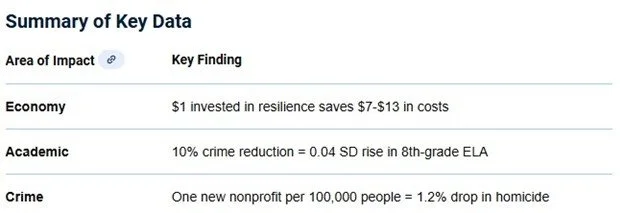
These findings suggest that investing in CBEL’s resiliency-producing activities, local education, and economic stability is a proactive strategy that creates a safer, more prosperous community.
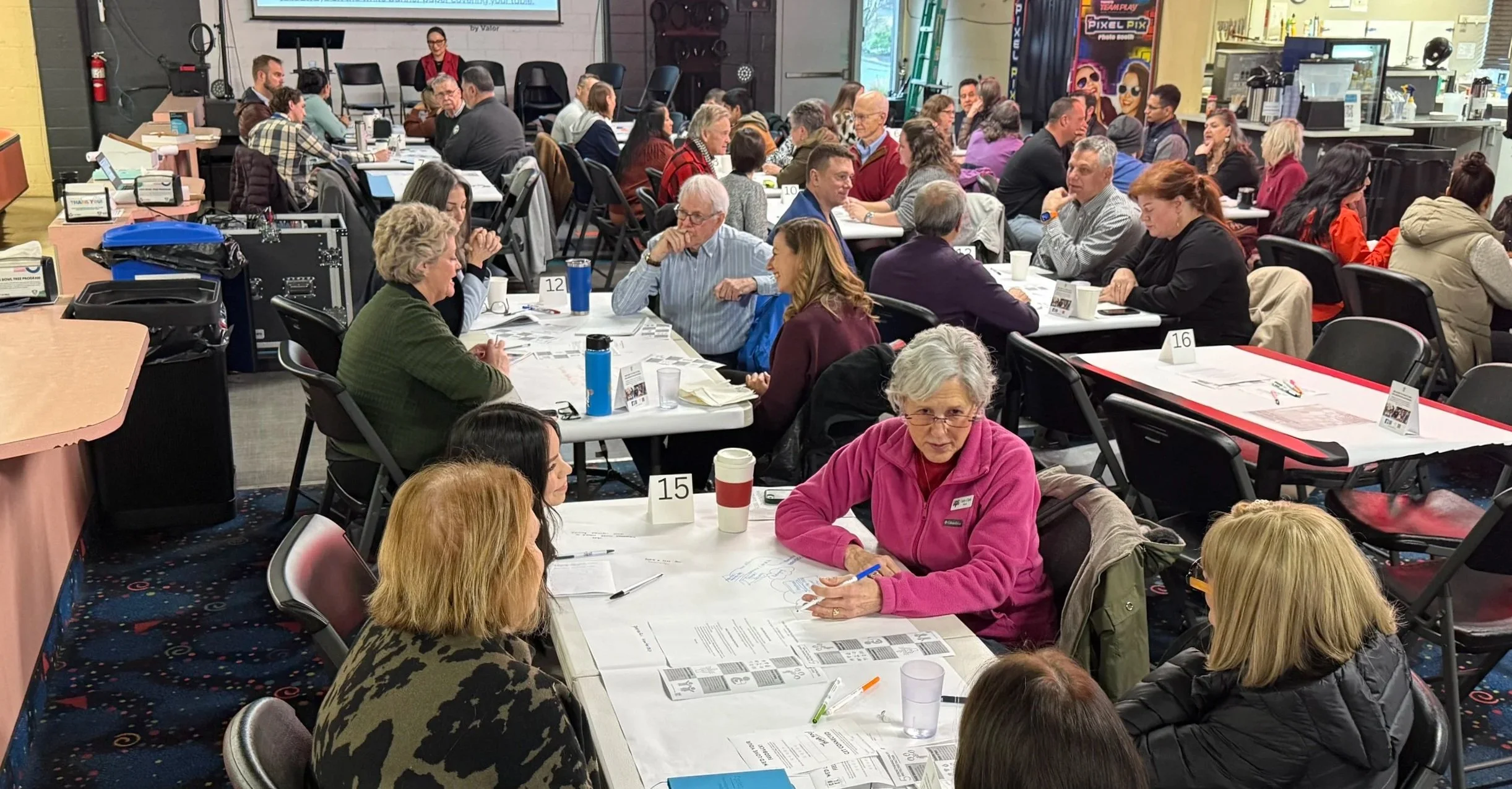
In January, about 70 people gathered for CBEL’s Collaborative breakfast and conversation, discussing ways in which we can reduce drag and maximize efficiency in our neighborhoods, gradually increasing the health, safety, education, and housing for all.
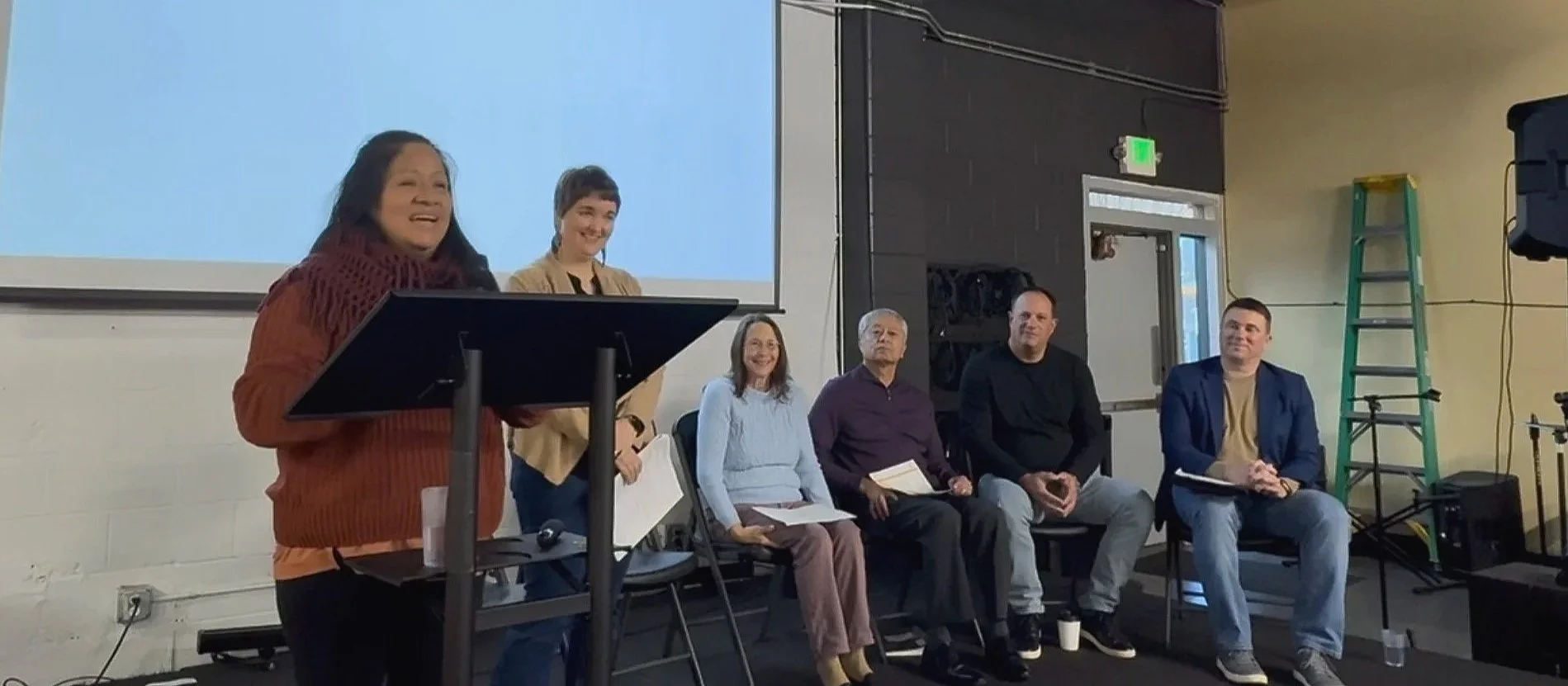
A panel of four neighborhood and community leaders began this “appreciative inquiry” process by describing “what is going well,” and “what even better would look like.”
Imelda Sanchez, a grassroots leader and one of the founders of the Kennedy Neighborhood Family Council (NFC), said the study and practice of the Five Family Strengthening Protective Factors has helped her neighborhood build more tangible support for families and students who are struggling. She said the protective factors (especially concrete support in times of need, and social connections) had helped her find resiliency after a divorce. “Better” in her words, is being able to do likewise for dozens of other families in need, some experiencing the same adversity as she did.
Justin Hopkins, executive director of Willamette Health Council, talked about the Community Health Improvement Plan now in place has a focus on belonging, and how “the unprecedented collaboration among community partners” will help improve health outcomes, while lowering the incidence of violence in our cities. He mentioned that the high level of collaboration will produce “better access to health care, affordable housing, and comprehensive mental health services” and that the focused consensus will contribute to the development of necessary public policy and capital investment to achieve our goals.
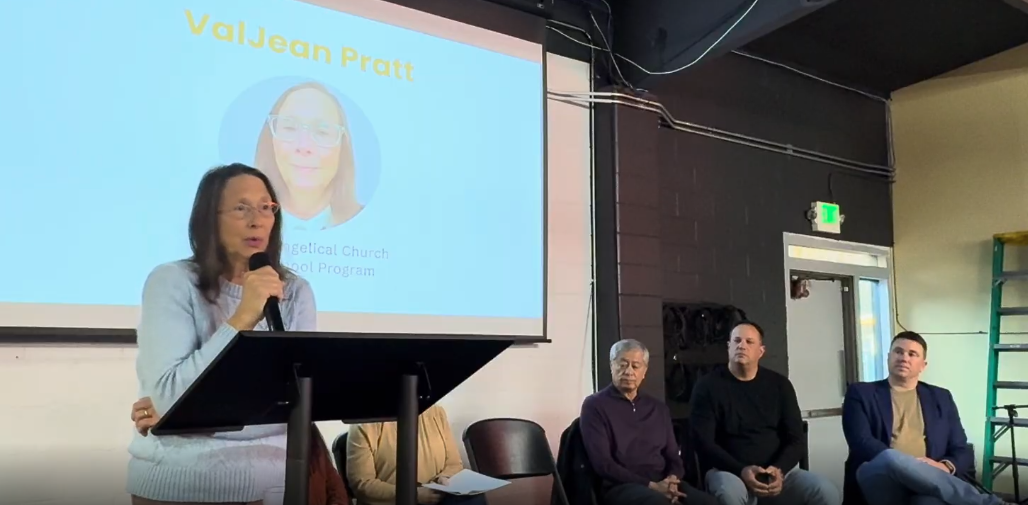
ValJean Pratt is a longtime member and volunteer at Salem Evangelical Church. Through her leadership, the Highland NFC gained a valuable partner in development of programs that benefit students at Highland Elementary, as well as their families. Her own challenged youth, when an aunt and uncle “rescued mom and us five kids” from an abusive, toxic homelife, gave Val Jean firsthand experience in the value of the Five Protective Factors.
“The church has been a conduit of growth for me and for countless neighborhood families since 1980,” she said, “and the additional partnership with the school and the Highland Family Council has only multiplied the impact of the Five Protective Factors.”
Long before partnering up with the Highland NFC in 2023, the church welcomed Highland Elementary kids to their multipurpose area after school, after the school district stopped after school programming. Using church volunteers and funds to help nourish and keep the children safe until parents arrive after work, the church continues to support the Highland NFC with free space to hold activities that draw more than 150 families (500 people) at a time.
Rich Kansky, CEO of Green Acres Landscape, said his philosophy of listening to his 120 employees – many of them first-generation Americans - and helping their families in times of crisis, is a way businesses can model aspects of the Five Protective Factors.
Kansky, whose company was a Salem Chamber of Commerce Business of the Year winner, teaches employees entrepreneurship, and partners with Salem Leadership Foundation and the School District’s Career Tech Education Center (CTEC) to mentor young adults.
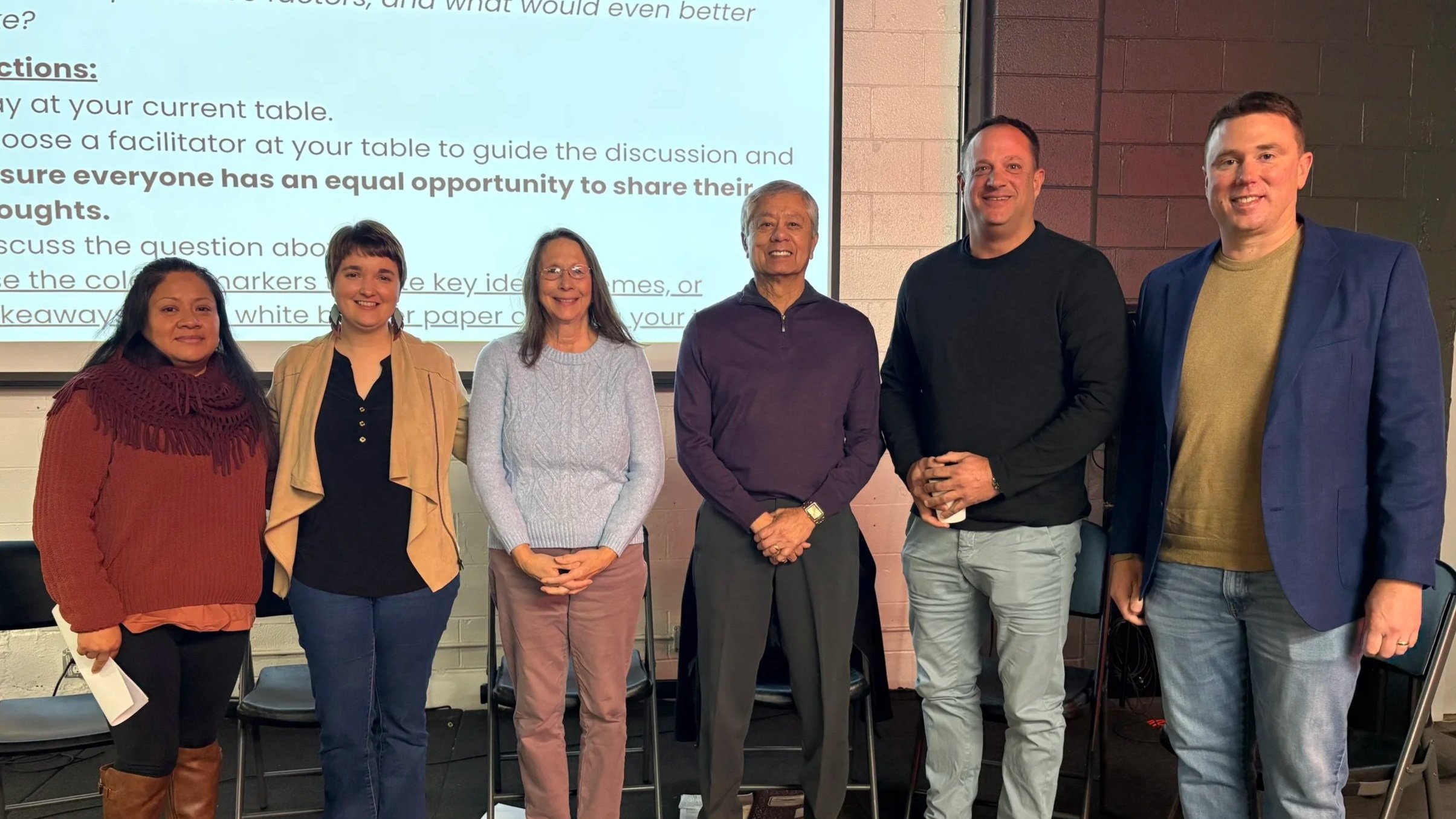
Left to Right: Imelda Sanchez (Kennedy NFC), Ashley Russell (CBEL), ValJean Pratt (Salem Evangelical Church), Bob Sanchez (Retired SKSD Board and Staff), Rich Kansky (Green Acres Landscape), and Justin Hopkins (Willamette Health Council)
Here are a few comments from those who attended the Collaborative gathering and participated in the discussion about how CBEL’s efforts are valuable:
Rian Rasubala, Neighborhood Connector, Salem Leadership Foundation: “I think multi-sector collaboration is more possible because of these CBEL Gatherings.”
Sally Cook, Prevention Educator, Marion County Behavioral Health: “I like the appreciative inquiry/community café model and personally enjoy CBEL gatherings for that feature.”
Paige Clarkson, District Attorney, Marion County: “I truly enjoyed hearing from the presenters and reflecting on what is working well, as well as recognizing that we all have opportunity for improvement throughout our city’s schools, non-profits, and businesses.”
“My experience in the small group tables was especially enriching. I had the opportunity to hear from someone with lived experience in the criminal justice system and I appreciated hearing firsthand how their family had been positively impacted by the services provided by our juvenile department.”
“I applaud the work CBEL is doing and believe in the vision – strong families and communities are truly the foundation of public safety.”