
What the Mouth Might Say after the Heart Opens
Written by Tim Buckley, July 2026
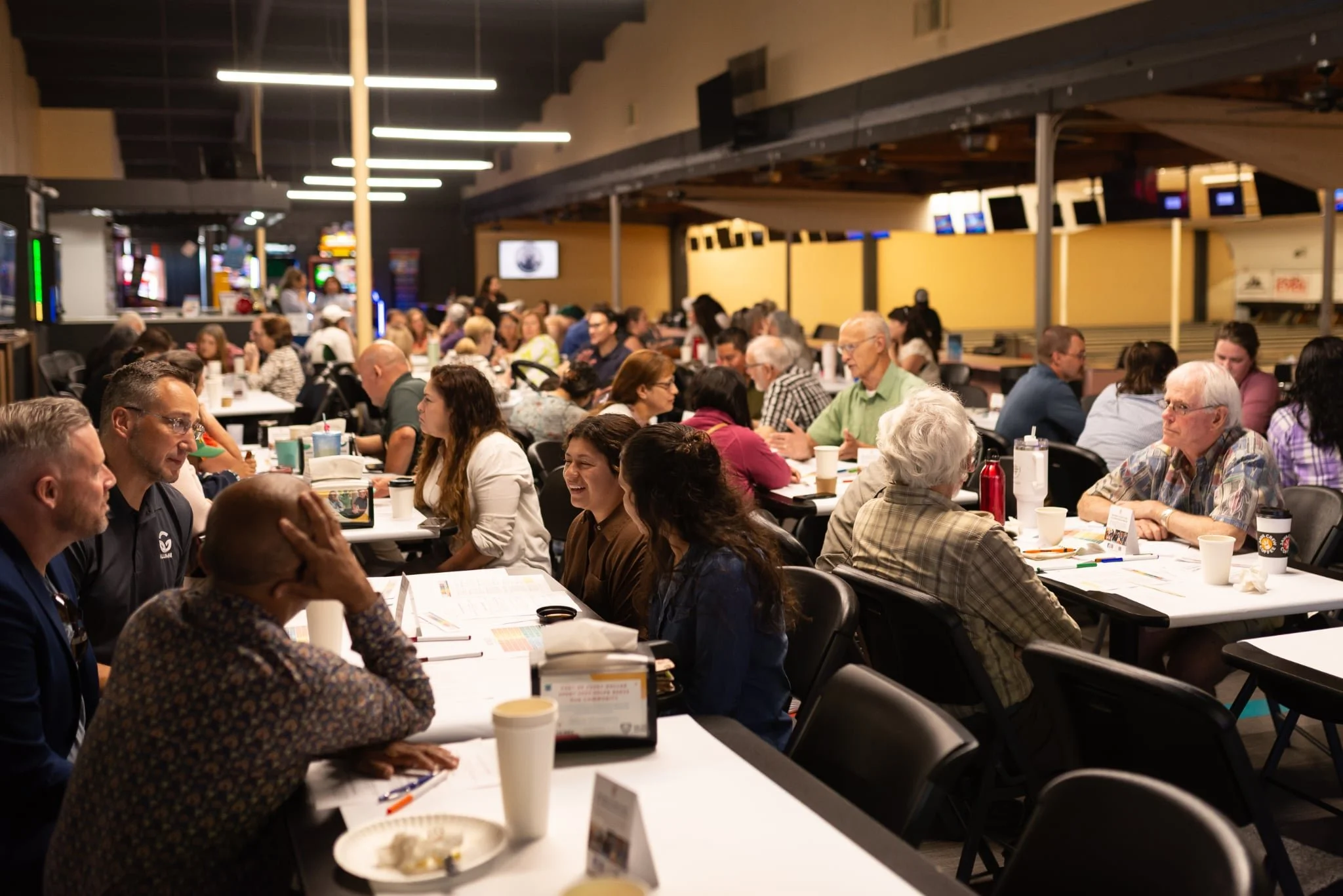
The first guy, when he opened his heart, said he was in medical school when the Vietnam War swept him into service. His battlefield hospital experience was so impactful that he abandoned his dream of becoming a medical researcher. “I had to rediscover myself after the war,” he said. “I found it practicing medicine in a small town, through strong, close relationships.”
The second man, nearly the same age, said early life trauma living with a mentally unstable mother “was my Vietnam!” Seeking answers, he studied psychology and became a VISTA volunteer, working with dysfunctional families. He remembered saying to himself at the time, “This makes sense for me!” His entire career was spent as a family therapist.
And so it went at small table discussions during the July CBEL Collaborative Gathering - Learning of the Heart. After hearing personal stories from four panelists, these two and about 80 others took turns sharing stories prompted by two questions:
When, and from whom, did you begin to gain emotional intelligence?
How can you use what you know now to help others in the community learn about feelings and how to express them in appropriate ways?
Each Collaborative begins with a shared breakfast, and then a panel of grassroots and grass tops leaders begins the conversation, this time about matters of the heart.
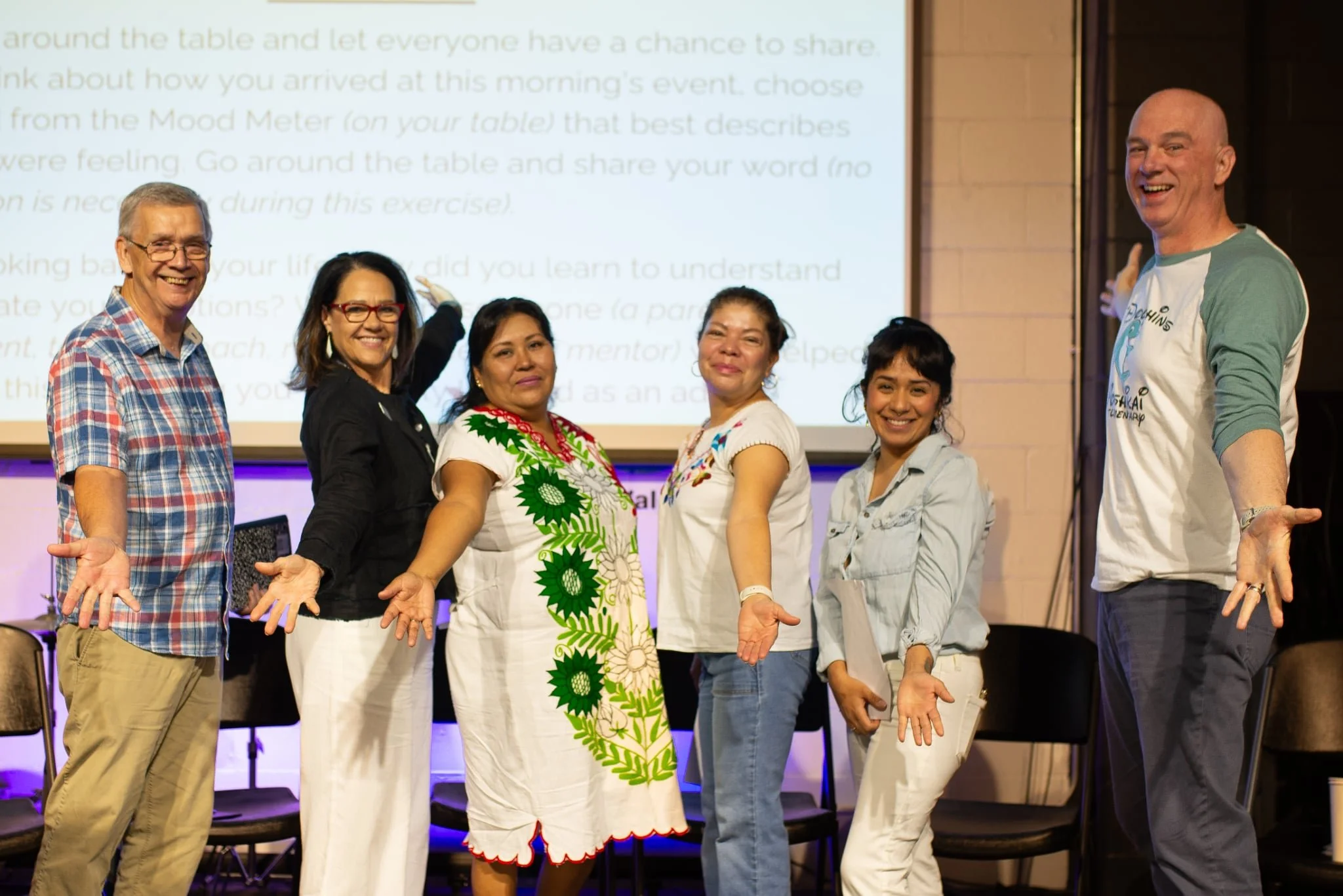
Two neighborhood moms led things off, their testimonials translated live into English by Elizabeth Heredia. Maricela Lagos told the audience, “As children of immigrants, we weren’t raised to speak about feelings. ‘You have to be strong,’ my parents would say, and ‘don’t ask anyone for help’. And as for seeking counseling, you just didn’t, because people would think you were ‘loco’,” she added.
Veronica Carlos, like Maricela, comes from a family reluctant to share feelings. “The immigrant community is under immense pressure,” she said. “On top of that, we are trapped by the teachings of our parents and grandparents. Expressing your feelings means you’re breaking cultural traditions like ‘women are ‘the weaker sex’ and ‘men don’t cry’.”
Both women are teaching the RULER program as part of CBEL’s Parent Education program. RULER is a social/emotional learning program developed by Yale University’s Center for Emotional Intelligence. RULER stands for Recognize (your feelings), Understand, Label, Express, and Regulate. Each step is key to becoming emotionally healthy.
Maricela and Veronica were among the first group in the country trained to take the RULER program directly to parents, instead of just to students in elementary schools.
Being bilingual, the women teach the RULER program in Spanish while other CBEL staff teach the English version. Both women formerly taught adult classes for the Salem Keizer Coalition for Equality.
“For homework, we asked parents to document their emotions during the week,” Maricela said. “One mother told the group, ‘I don’t have that luxury; there just isn’t time!’ Others nodded in agreement.”
Veronica added, “One dad told the group, ‘I’m from a machismo culture. It’s very hard to admit that I don’t know how to express my feelings.’”
After the first class of more than 40 parents graduated the RULER program, from the Washington and Yoshikai neighborhoods, it was clear that progress was being made, Maricela said. “With more attention, you see better outcomes – lowering toxic stress and reducing depression.” Graduates are taking their lessons deeper into their own families and into the community.
A third panelist, Lisa Harnisch, said, “I hit the jackpot, having a strong family that encouraged us to express feelings. Growing up, I remember reading Jamie Lee Curtis’ book, Today I Feel Silly & Other Moods that Make My Day. Those times became the basis for my career choices, where family life, education systems, and community support come together.”
Lisa is the Executive Director of Marion/Polk Early Learning Hub and sits on CBEL’s board of directors. The Early Learning Hub is a “Impact Initiative” partner as CBEL continues to innovate ways to increase parents’ roles as their children’s first and most important teacher. The growth of children’s social and emotional literacy is a primary element of CBEL’s neighborhood strategy, one of the five Strengthening Families Protective Factors.
The fourth panelist, Jesse Leonard, is Principal of Yoshikai Elementary School, a charismatic leader and RULER champion. He reported that since implementing RULER, “Referrals for bad behavior are down 50 percent. More significantly,” he continued, “school suspensions have been reduced by 70 percent, and attendance is up eight percent.”
“I think teaching social and emotional literacy is as important as math,” Jesse emphasized. “It’s not a quick fix. At our school, and in the district, building emotional health in the staff and students is part of our ‘long game’ strategy.”
“I adopted the RULER program when I was Principal at Kennedy Elementary, about the same time when Eduardo (Angulo, CBEL’s Executive Director), met with me about the new Neighborhood Family Council forming,” Jesse explained. “His idea of partnering with the school appealed to me for two reasons. First, schools often show improvement when neighborhood parents are actively engaged and supportive of their children’s education. Secondly, CBEL’s offer to expand the RULER training into the neighborhood families was really intriguing,” he added. “And, apparently Yale University felt the same, because they used one of their grants to allow CBEL staff and neighborhood Council members to be trained for free.”
“The important thing to remember about teaching social/emotional learning in schools, people come first,” Jesse added. “Without it, academic achievement will continue to suffer. But, as quality relationships are established throughout the school, test scores will improve.”