
Is the Mood Meter on Your Fridge?
Written by Tim Buckley, April 2026
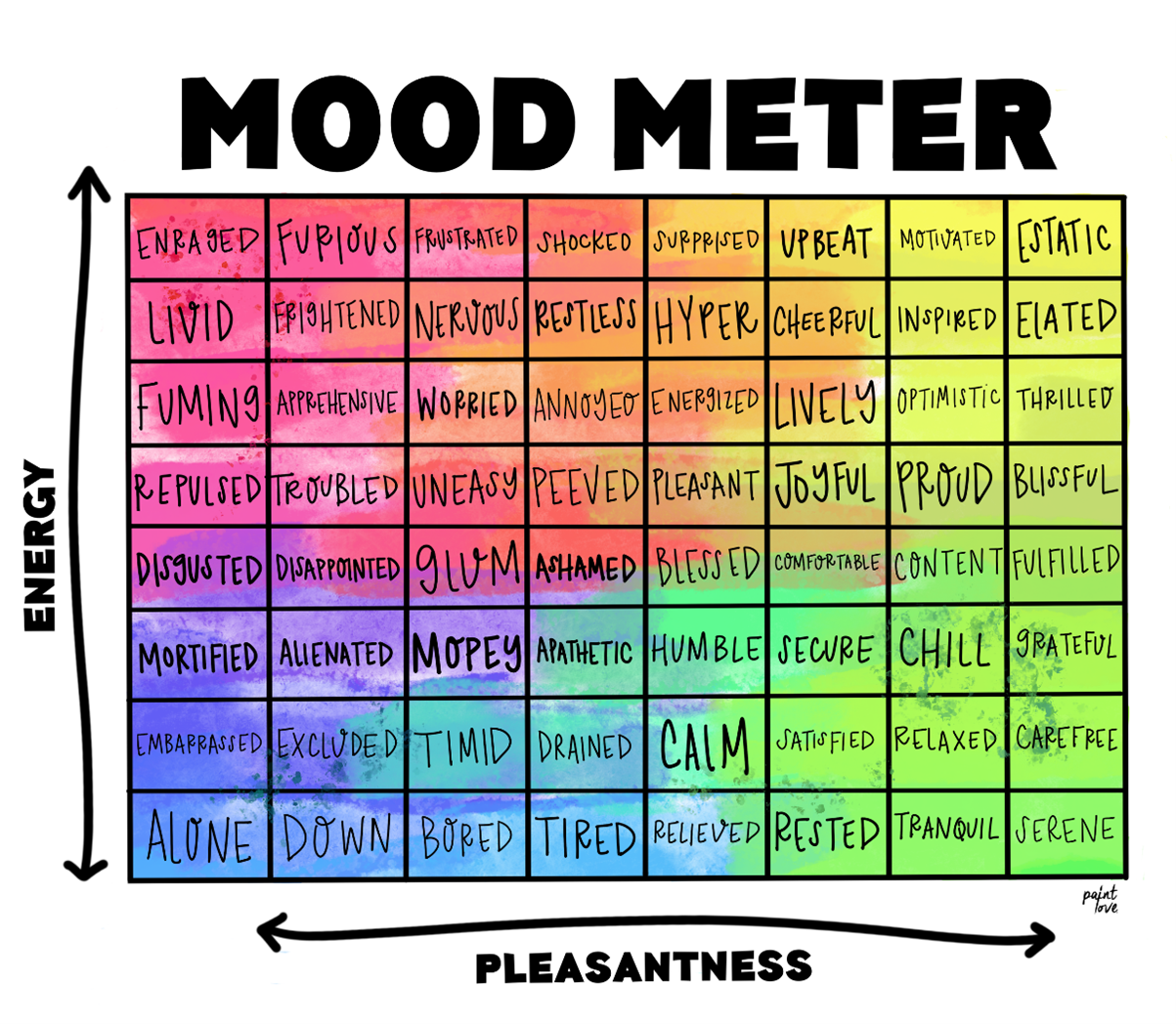
It looks simple enough, a big square with words listed in smaller, colored rectangles. Then someone asks you: “Which color represents your mood right now – red, yellow, blue or green? And what word in that area best describes what’s going on for you?”
Those not trained at identifying feelings might struggle with answering right away. And when emotionally triggered, it’s particularly hard.
Children in several Salem and Keizer elementary schools are now using the Mood Meter as part of a broad school district effort to improve academic outcomes by using emotional regulation skills in every elementary classroom. CBEL is the first non-school organization in the country to bring the RULER Program (social/emotional learning) directly to families.
“It’s wonderful to see,” said Rick Newton, who co-facilitates parent groups for neighborhood families. “Parents come in feeling guarded and leave very much at ease. Nobody likes conflict,” he added, “and these skills allow parents more capacity to regulate their own emotions and better handle their children’s.”
The first area school to employ Yale University’s RULER was Cummings Elementary. Andy Kronser, the Principal at Cummings who introduced RULER, has since been promoted to be one of the Directors of Elementary Education for the district.
RULER is an acronym:
Recognizing,
Understanding,
Labeling,
Expressing, and
Regulating emotions.
Seven of CBEL’s staff and neighborhood family council members were trained in RULER and invited to use it in all its classes and activities.
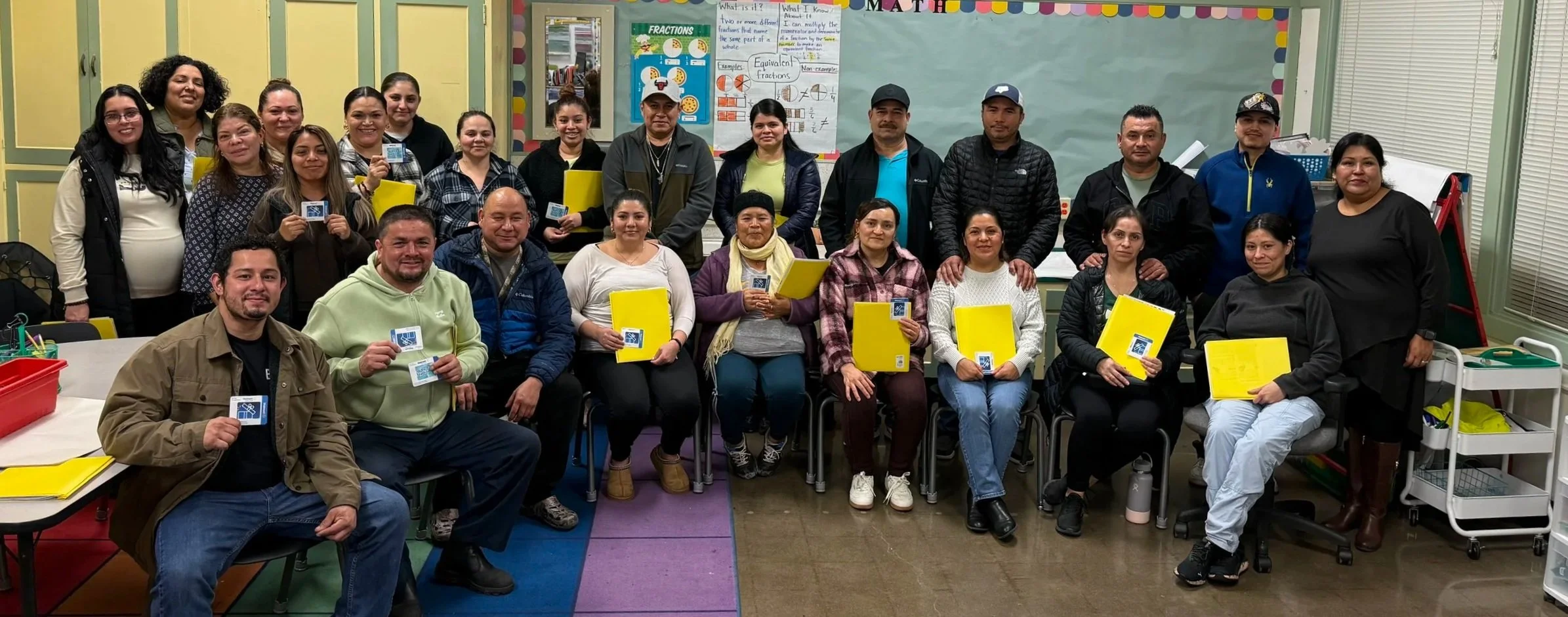
First Spanish RULER class at Washington Elementary School
“When parents and children come to one of our classes, the Mood Meter is there at the welcoming area and everyone is invited to say where they are,” Rick said. “The second element of RULER we teach is called the Meta Moment, which refers to that stressful instant when you must choose what to do in the next moment.”
Meta Moment skills teach us to prolong the space between the triggering event and what your response will be, whether you will be able to respond calmly, rationally instead of reacting, getting loud and physical. Here are the six steps:
What is the trigger?
How does it affect your body and impact how you think about the other person?
Let’s pause.
What’s your best self and how would you like it to show up right now?
Regulation of self – through a time out, deep breathing, or other calming strategy
Having a sense of satisfaction seeing the results of using the Meta Moment properly.
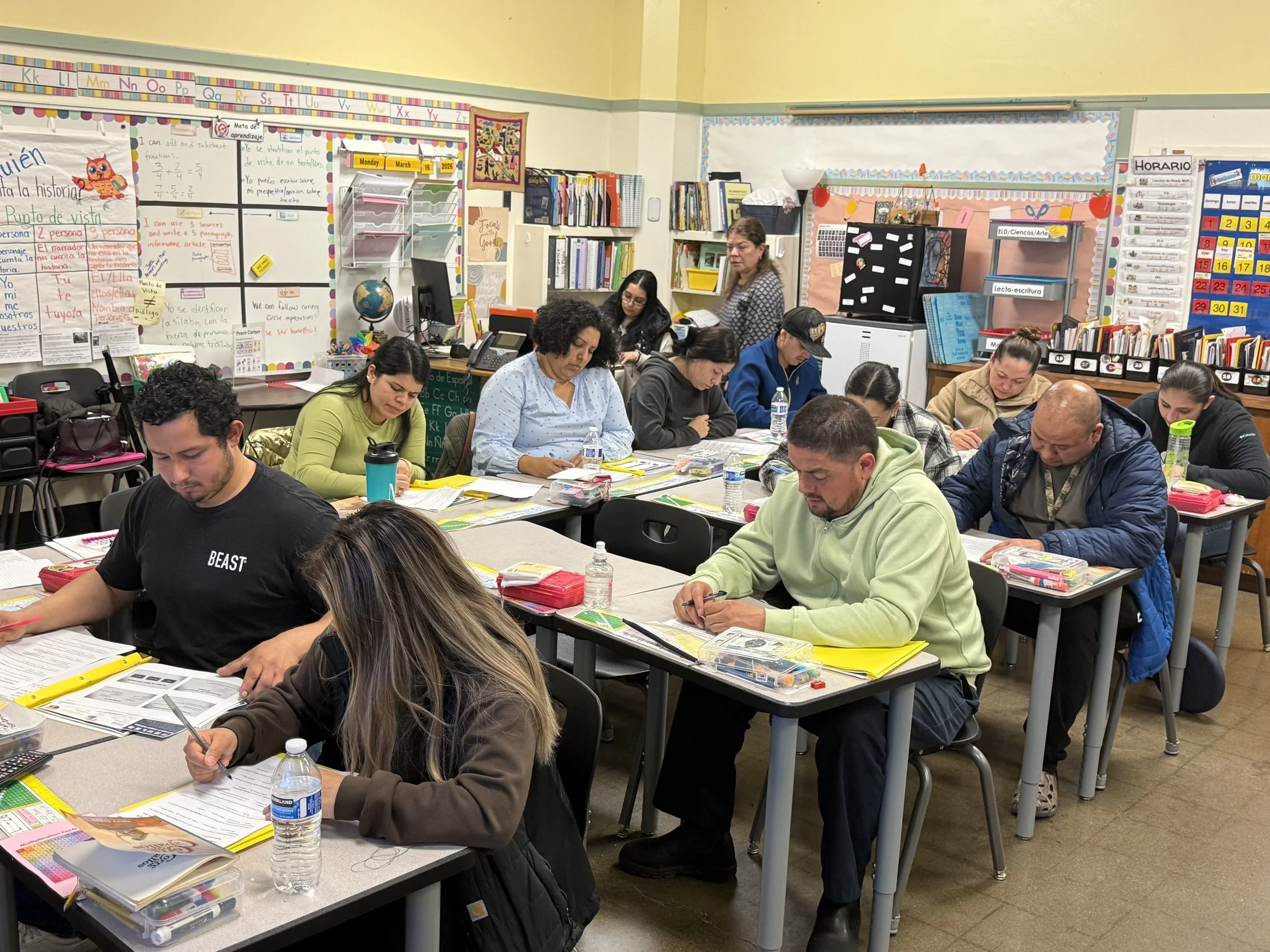
“All the Neighborhood Family Councils have access to these tools in a variety of ways,” Rick added. “We use it in all our Infant Toddler Play Groups, and in our Parenting Classes too. The popularity of these events has grown a lot,” he continued. “Offered in both Spanish and English, we’re having more people show up each time. At the most recent class at Yoshikai (CBEL’s 6th, and newest, neighborhood), we had 27 parents and 23 children. At the Washington class, there were 36 parents.”
Miriam Korangy, a director at the Yale Center for Emotional Intelligence, said this about the effect of teaching RULER skills both at home at in schools: “When families learn and practice RULER alongside schools, students experience a consistent, reinforced message across home and school. That alignment helps students apply the skills more deeply.”
Andy Kronser reflected on the response of a student’s father, who was initially upset that his child was learning emotional regulation in school. “It’s a waste of time!” he told me. “But that all changed,” Andy said. “The dad came to me later and said that the RULER program made a huge difference, and that the child had experienced ‘the best year of school ever!’ Now, he’s an avid promoter of RULER!” he added.