
Slowing Time and Telling Stories Builds Community
Written by Tim Buckley, November 2025
Maribel Calderon, Chair of the Highland Neighborhood Family Council, teared up telling a personal story of family hardships and renewal at CBEL’s last Collaborative, in November.

Andrea Casteñeda teared up, too. The Superintendent of Oregon’s second largest school district (Salem-Keizer) expressed frustration and anger about treatment of immigrant families by ICE. Many in the audience of about 100 teared up, too, hearing both stories.
CBEL’s Collaborative gatherings are increasingly impactful, partly because of the subject matter, and partly because leaders like Maribel and Andrea show up with honesty and vulnerability. They’ll tell you that these gatherings make it easier to open up because they bring diverse people together in a safe environment, where trust grows and where sharing personal stories has become commonplace.
“We can see culture only when we step out of it,” wrote the authors of The Abundant Community,” a book that CBEL staff are discussing together. CBEL gatherings help participants to see our own culture, step out of it, see and appreciate other cultures, and then purposefully create a new assembly of willing individuals. At these gatherings, time slows down, good listening ensues, and storytelling builds connections.
Maribel and Andrea made up one third of a small panel of grassroots and grass tops leaders speaking to a packed house at the breakfast gathering. The panel was reprising an appearance at the Collaborative a year before, reviewing changes in their lives over the past year in the areas of safety, housing security, and education.
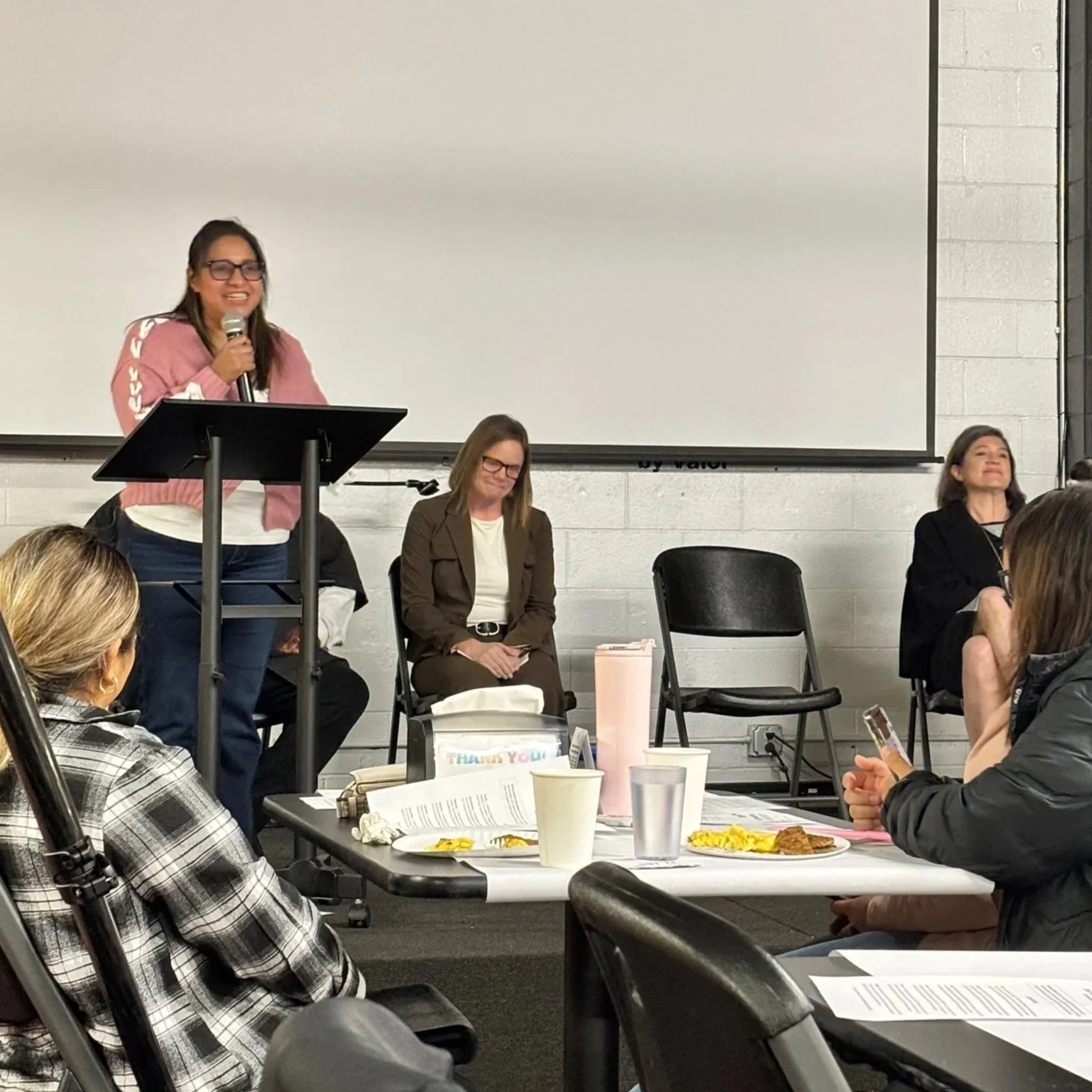
Maribel was recounting with relief and joy the latest news about her oldest son. Not many years ago, she struggled as a mother trying to understand him. He was adrift in his teen years, failing in high school and in trouble with the law. Now he’s thriving, engaged in family life again and just promoted to a restaurant management position. She told the spellbound crowd how important that wake-up call was for the family, how it illustrates the importance of kindness and second chances from trusted community partners like police agencies and county correctional officers.
Andrea’s eyes welled up with tears and her voice faltered as she talked about a recent incident in the county when ICE roughly detained Latino families suspected of being in the US illegally. Her comments supported a call for safety and justice, as well as reiterating the importance of neighborhood and community-wide resources to help students and families find their way through such stressful times.
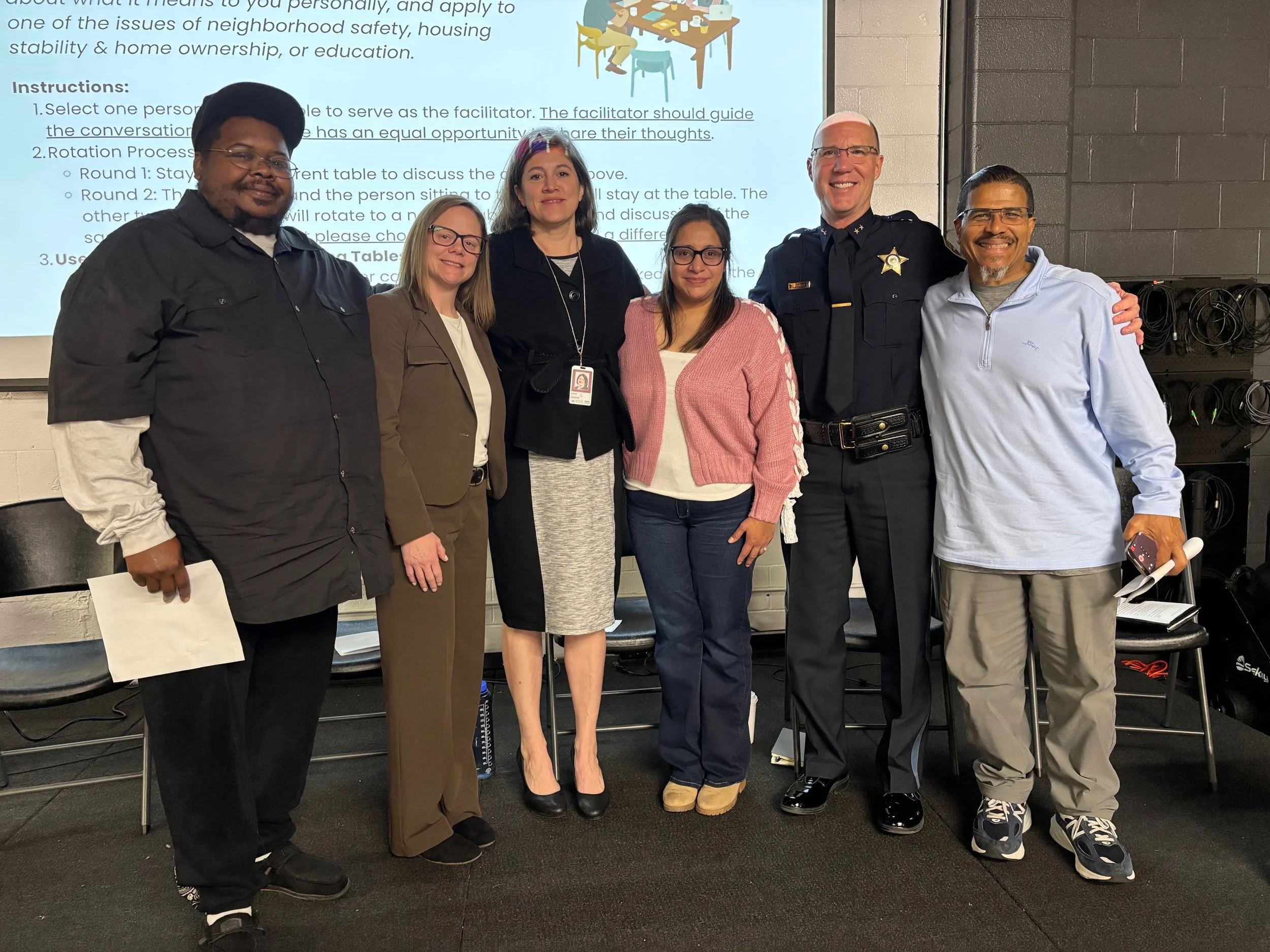
Others on the panel included:
Ron Berkley, Kennedy Neighborhood Family Council Vice Chair
Jessica Blakely, Salem Housing Authority Director of Development & Strategy
Trevor Womack, Salem Police Chief
Eduardo Angulo, Hallman-Northgate Neighborhood Family Council Chair
Ron said his family struggled for more than a decade to finally buy their own home. “Better, for me, would be to see more low-income people being able to get a home, too,” he said.
Trevor talked about how trusted partnerships between neighborhoods and police is crucial to reduce violence. “What happens then, we move from always reacting to crime to being able to prevent crime,” he said.
Jessica said, “we must change our ideas of those who are marginalized, including those who are without housing. The stories of their experiences helps to rid ourselves of social stygmas.”
Eduardo pointed out that CBEL’s five neighborhoods are living proof that elevating and amplifying the voices of those living in adverse conditions helps empower those neighborhoods, while effectively conveying their needs to agencies and resource organizations who are there to support community growth.
In the final 40 minutes of the Collaborative, small groups discussed two things:
How our own experience reflects adverse conditions in our life and,
How we can personally help foster more neighborhood safety, show support for affordable housing and promote first-rate education for all students.
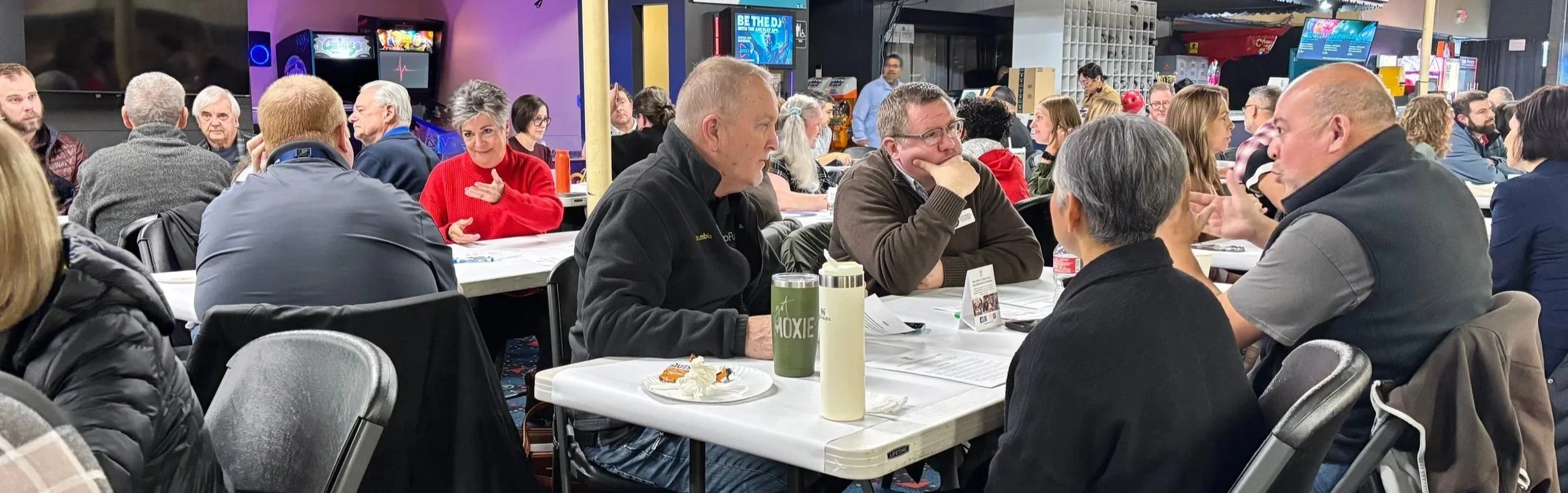
Those who reported out their table’s summary, also reflected in notes written out, suggest that there is personal work to do – reducing personal biases we have and engaging openly with those we are wary of. Another common point was to promote powerful storytelling and amplify the voices of those with chronic adversity.
“My grandmother had a saying: Be happy and do good work!” said Andrea Casteñeda, “By ‘good’, Grandma didn’t mean ‘great accomplishments,’” Andrea added. “What she meant was, ‘Do good work in the world for others.’”