
Written by Tim Buckley, November 2026
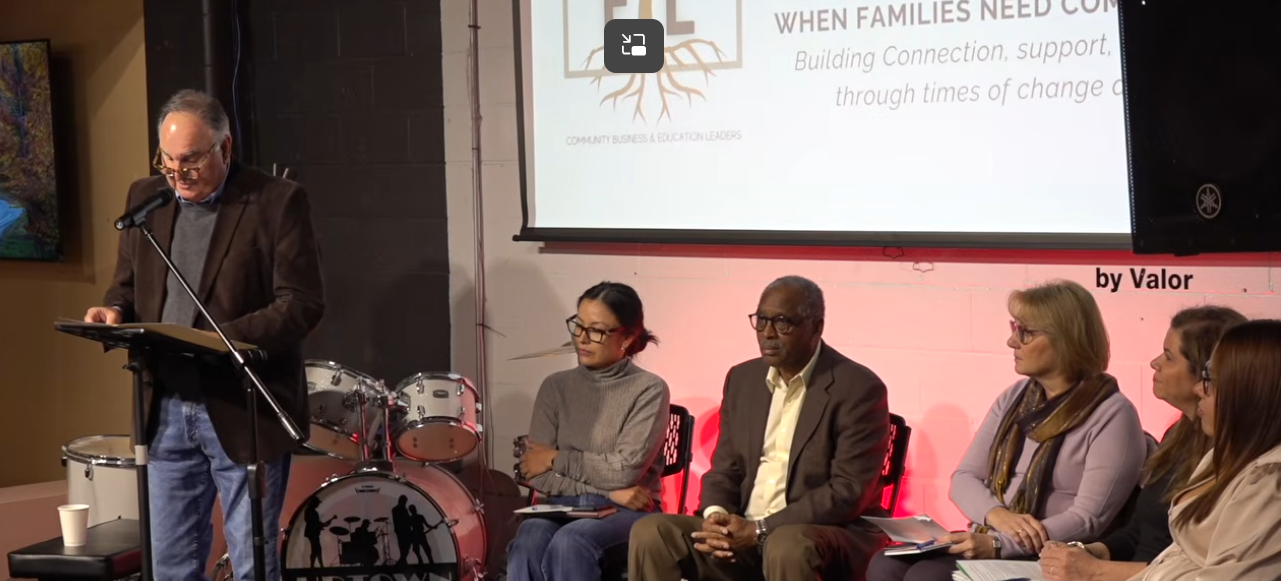
Now into its sixth year, CBEL’s every other month Collaborative gatherings continue to grow in popularity and consequence. November’s gathering – When Families Need Community Support the Most – drew 100 and nearly filled The Rec’s deep hall. More importantly, it added to a growing sense that each community conversation is cumulative, building mutual resolve in the direction of a shared agenda for community health and resilience.
The panelists this month:
· Olga Cobb, deputy Superintendent, Salem-Keizer School District
· Sara Csaky, Counselor, Arbol de Vida (Tree of Life Counseling)
· Gregg Peterson, Executive Director, Be-Blac Foundation
· Karina Guzman, 2nd Vice-Chairman, Salem-Keizer School District
· Darian Owens, Neighbor Connector & Outreach Coordinator, CBEL
School Closures. How Do We Respond?
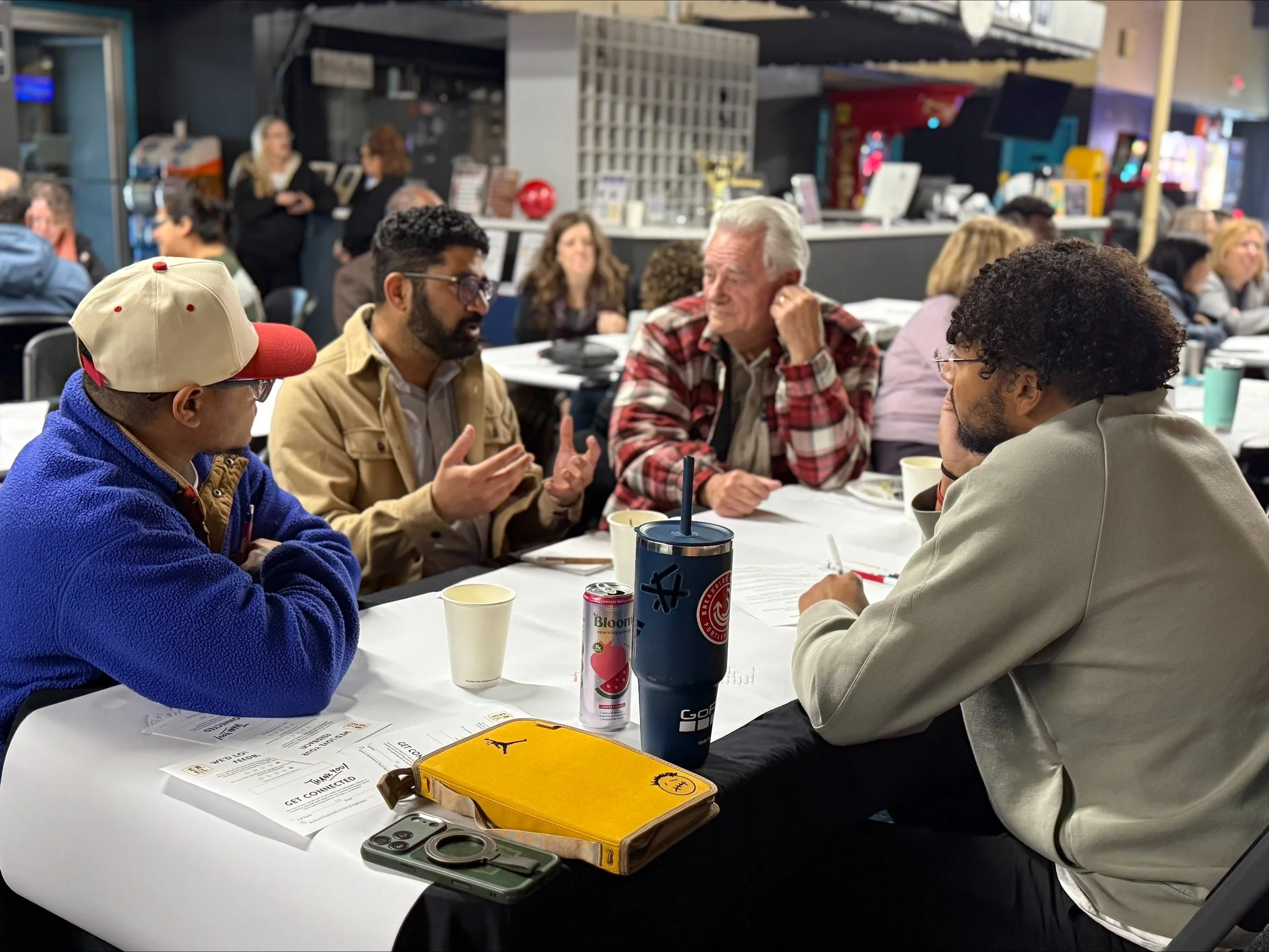
With pending elementary school closures, the next year is filled with uncertainty and dread. Parents, students, teachers and school staff fear the loss of familiarity. In addition to its being a financial challenge, the changes bring even more emotional challenges.
The Collaborative structure - instead of approaching the topic in “pro versus con” fashion - asked panelists and attendees to talk more personally about loss. What was the occasion of great challenge for you? And where did you find the support that helped you the most?
Olga Cobb. A first-generation immigrant from Latin America, Olga struggled with learning English and finding a decent job in Salem. A persistent neighbor kept asking her, “How are you doing?” The true concern she showed broke through the cultural and language barrier. Her neighbor saw Olga’s difference as an asset and helped her apply for a bilingual position at the school district.
Gregg Peterson. Born to troubled parents, Gregg later tried to compensate with alcohol and drugs. He became homeless, both in Oregon and in Nevada, and lost his daughter to foster care. “Back in Oregon, and still homeless, it was a blessing to find a bed at United Gospel Mission,” Gregg said. “Working with the 12-step program, my challenges didn’t go away, but the support of others made my recovery possible.”
Karina Guzman. Born in California to migrant farmworkers, Karina was sent to live with family in Mexico for a couple of years so her parents could focus on making the necessary money to build a secure life for the family. Recalling her early school years at Highland Elementary, she said, “The unwavering support of my parents, a welcoming atmosphere created by my teachers, and a consistent routine where I could build lasting friendships were all important.”
Sara Csaky. “The American Dream was a nightmare at times,” said the counselor, born in Argentina. “Besides the challenge of learning a new language, it was hard always being asked to explain your status as a citizen,” she added. “And the legal process to become an American is lengthy and hard. What made it manageable was having friends and supportive organizations.”
Darian Owens. “I remember how difficult it was as a mother, working two jobs with three kids and no childcare,” Darian said. “I remember my son Matthew being terrified when I tried to enroll him in preschool, begging me not to leave him. So, I waited another year, when he was able to enter Lamb Elementary, where my four younger brothers attended.” With that history, Matthew’s path was made easier. “Teachers and staff greet the kids by their first name, and they show care.”
“Belonging isn’t always some big thing,” Darian added
Sara Csaky. “It’s hard in our culture to ask for help. While challenges can make you stronger, working collectively can also make things easier. It’s heartening that society now acknowledges and provides support for mental health issues at schools. It’s nice to be able to listen to each other with an open heart.”
Gregg Peterson. With his daughter safe and finding support from folks like Sam Skillern (Salem Leadership Foundation) and Eduardo Angulo (CBEL, NAACP, Salem-Keizer Coalition for Equality), Gregg found meaning, employment and eventually opened his own restaurant. He reunited with his daughter and began to have the capacity to give back. He’s the Executive Chef at Kroc Center and the founding director of Be-Blac Foundation, which helps build opportunities for individuals and families.
Olga Cobb. “Strong relationships are important for getting past loss. Protect those strong connections formed through school – the crossing guards, the counselors and the teachers. Dealing with change takes all of us - schools, nonprofits and businesses -allowing some flexibility to make things more manageable for families.”
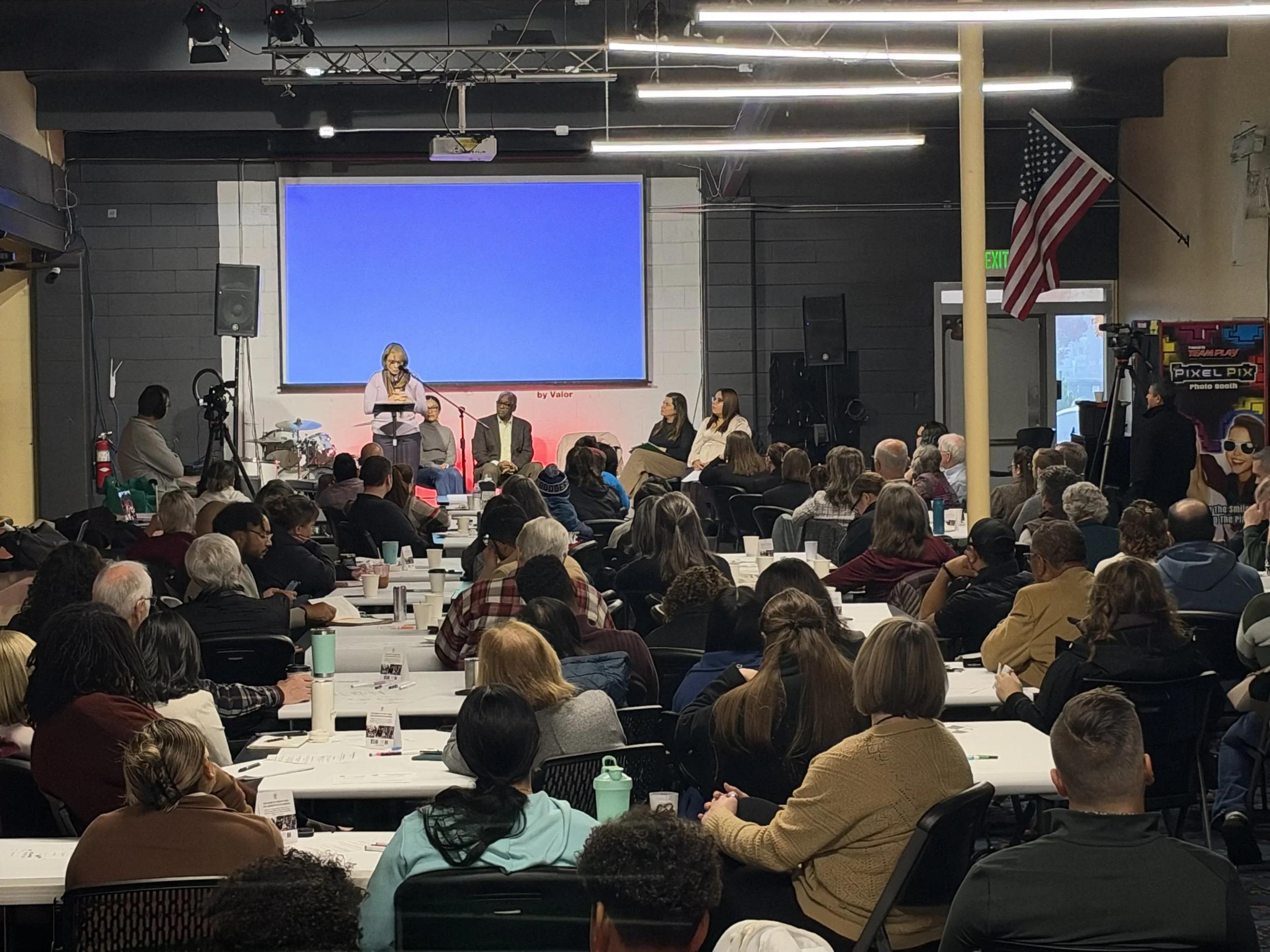
Summary. These themes repeated themselves as those in the audience shared personal stories and insights about loss, change and adaptation. “Be that person who invites people in,” said one neighborhood family council leader. “Be the ice breaker.”
Opening our hearts, and our ears, to the struggle of others helps to buffer their loss. One person compared it to Velcro: “Connection happens best when there’s nothing preventing a secure bond.”