
Dunn not Done Doing, not by a Long Shot
Written by Tim Buckley, October 2026
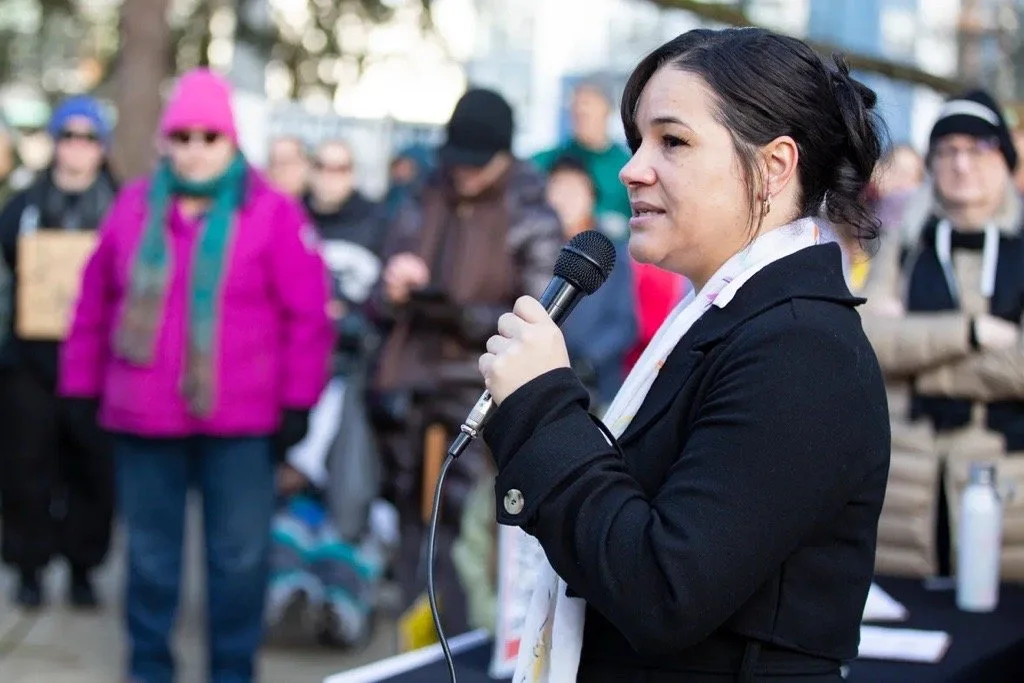
Ashley Dunn returned to Salem in 2021, asking the question: “How do I want to show up in the city where I was born, where I grew up; and what do I want for my three children?”
The questions led her to complete a master’s degree in social work. She also joined several organizations to help construct some answers. For a few years, she was a social worker with the School District’s behavioral health team. As a volunteer, she joined Salem Leadership Foundation and became a board member of the local NAACP and the Oregon Youth Authority. While representing the NAACP’s interests, she continues to bring ideas and energy to citywide collaborative initiatives – addressing major issues in Salem’s downtown area and helping with strategies to reduce violence in the metro area.
When asked how she views the challenges we face as parents and residents, she answered with this often-quoted African proverb: “If you want to go fast, go alone. If you want to go far, go together.”
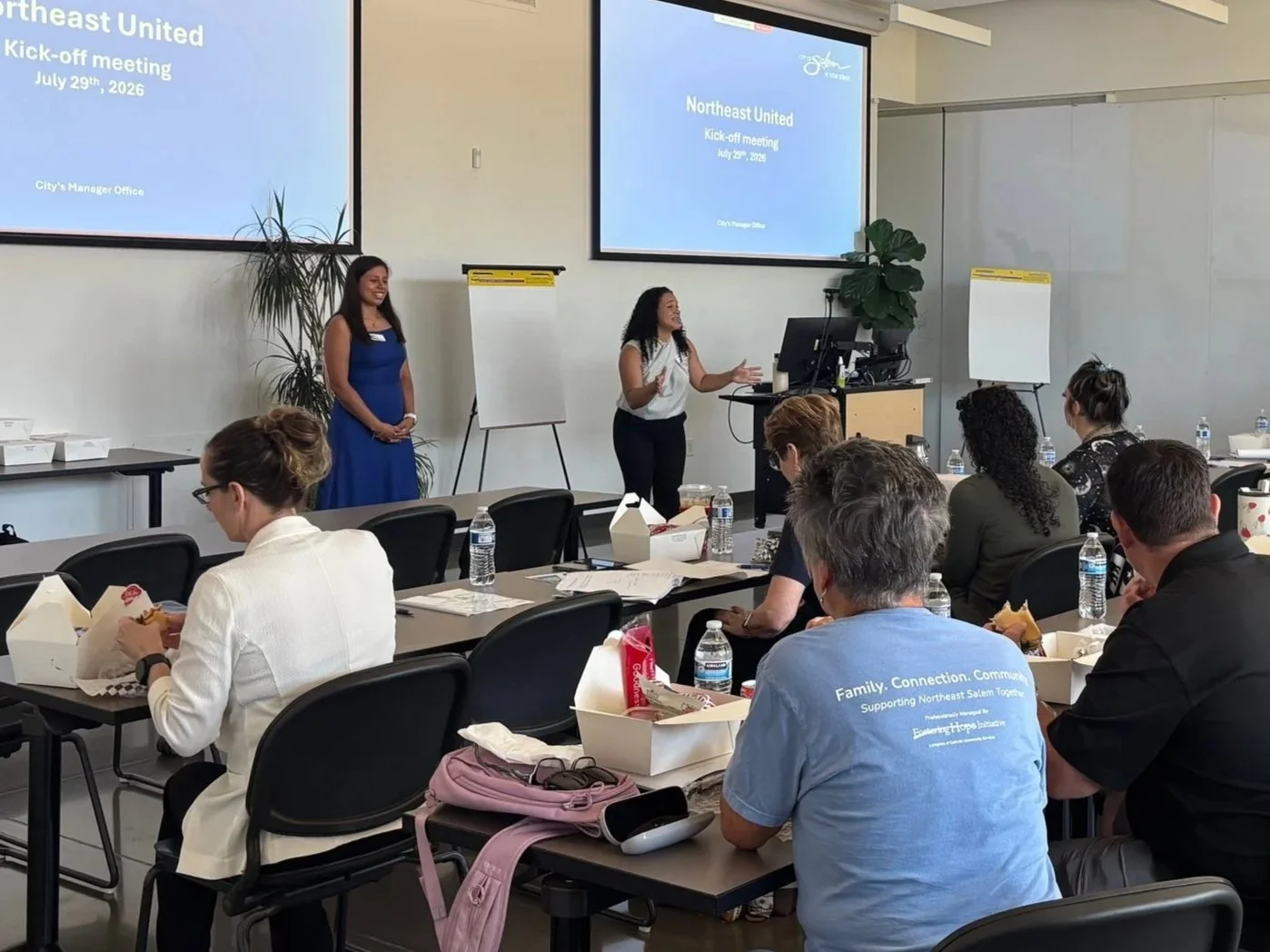
“The NE United effort is an extension of what the City learned during its participation in the Bloomberg-Harvard City Leadership Cross-Boundary Collaboration Track,” Dunn said. Begun in 2017, the Harvard-based group chose Salem last year to develop collaborative leadership and targeted strategies for addressing public safety in the city’s downtown core.
Unique in its approach to city problems, the Safe, Clean and Healthy Salem effort relies heavily on collaboration with key stakeholders in targeted problem areas, seeking those with lived experience to help craft long term remedies. From that effort, three pilot programs (HST, CLEAN, and REACH) have already made gains, improving outreach to unhoused people living on the street, lowering the number of emergency calls to downtown addresses and reducing litter and graffiti.
The NE United program is structured the same way, starting with a questionnaire sent widely during July and early August. Analysis of more than 300 surveys collected (75% of them NE Salem residents) highlighted three top concerns for the area:
Public Safety, including crime, street & sidewalk conditions, lighting, etc.
Unsheltered people, including issues like affordable housing
Public health, including affordable access to medical and mental health resources.
“A surprising takeaway from the survey,” Dunn explained, was the number of people who are unaware of how to get help for problems they identified. “About 40% said ‘I don’t know’.”
An advisory board of 30 people has been assembled, representing the diverse demographic and experience levels in NE Salem. Among them are seven people to be the “work engine” of the effort, meeting regularly over the next months to create a “public value statement”, kind of a mission statement and general roadmap for focusing on one specific area of concern, whittled down from three issues identified by the advisory group:
Chronic homelessness, including issues of housing affordability
Increasing access to health care and its resources
Youth development and support
The seven people working on the NE United core team include:
Eduardo Angulo, Ex. Dir. CBEL
Sue Bloom, former Ex. Dir. Boys & Girls Club; consultant, Epping Family Foundation
Collin Box, Ex.Dir. Capital Futbol Club
Katie Costic, Super School Coor., Mt. West Center for Community Excellence
Holly Nelson, Chief Officer, Chemeketa Community College
Christina Puentes, former OYA gang unit manager; CVRI consultant
Rian Rasubala, Dir. of Fatherhood Programs, Valor Mentoring
When asked if the collaborative strategy looks at all like what CBEL has put in place in seven neighborhoods since 2020, she said, “Absolutely.” Essentially, she added, “it’s a process where community organizations and residents with lived experience come together to examine these problems at the root-cause level, as well as the systems, or institutional, level. Collectively, we’ll figure out how to solve those issues and collectively, with NE people as partners, we will foster those changes into existence.”
Put another way, she said, “this is a structured approach for defining complex problems by engaging diverse stakeholders who will help define lasting solutions for achieving measurable outcomes.”
Dunn emphasized a couple of times, “I’m just a facilitator in the process. The movers and shakers are these groups of people, working together for a common goal without any organizational silos in place.”
By January, the public value statement will have been road tested and the core group will then fashion what Dunn called “entry points” for work on one specific issue. “Basically, this will be a pilot program. We’ll try some things and find out quickly if they’re the right things or not. We’ll come back together, again and again, to see what’s working and what isn’t. We’ll continually ask, ‘What are we missing? Who else’s perspective do we need?’ Then, we’ll reorganize, grow, change the necessary pieces and bring in additional people, then try again. This is a process,” she said, “not a fixed destination. These issues fall across so many spheres of influence; it takes all of us in the community to show up with our work gloves on. It’s community centric and community driven,” Dunn added.