
The Arc of Leadership
Written by Tim Buckley, October 2026
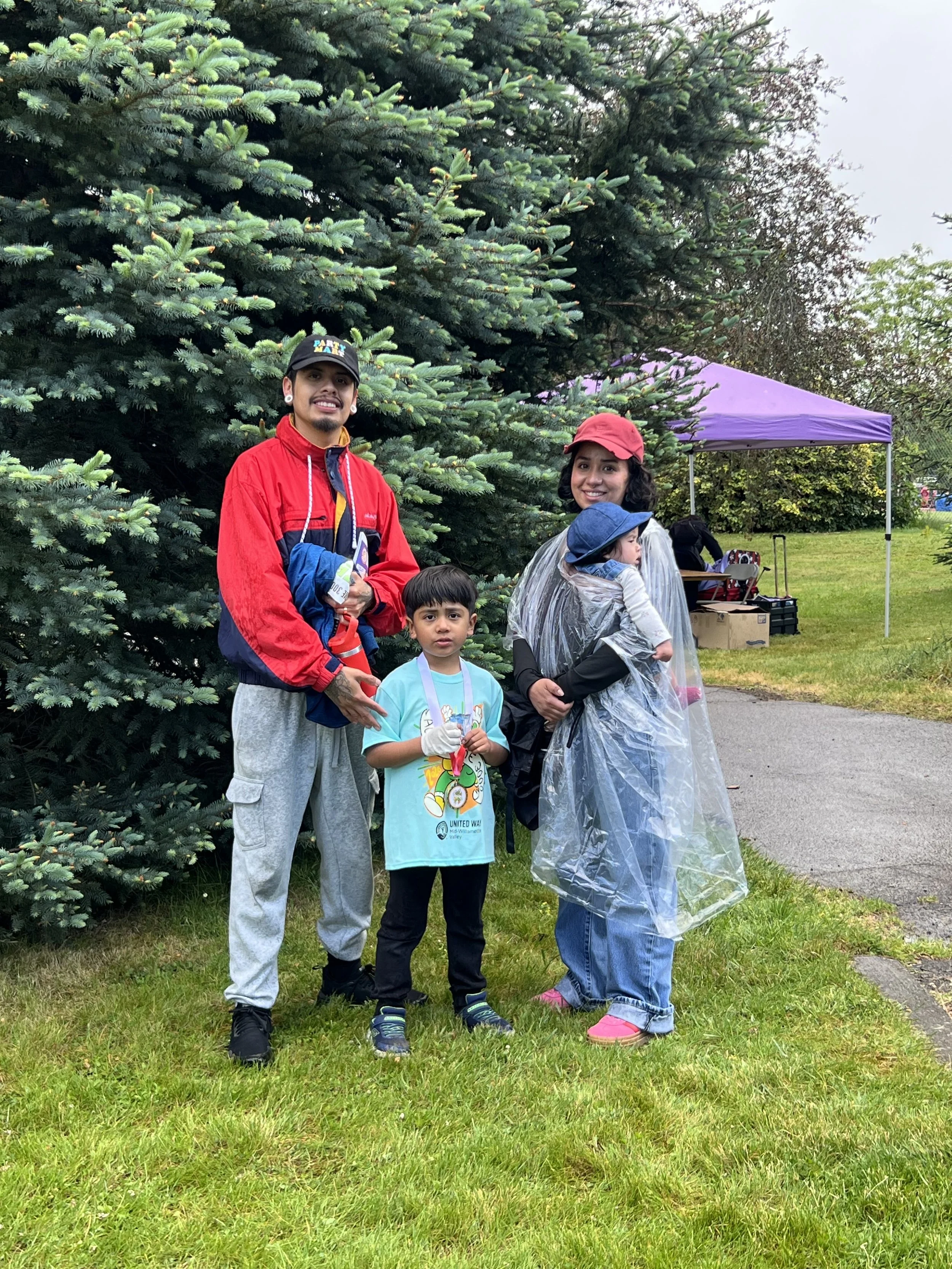
Upward mobility is democracy’s healthy lungs. Yesterday’s laborers become today’s managers and business owners, tomorrow’s professionals and elected officials. Leaderships change with every deep exhale. New parents seek to overcome challenges laid at their feet. Children hope to eclipse the accomplishments (and mistakes) made by those before them.
Elizabeth Heredia inherited strength, creative drive, and communication skills from a generation of determined relatives who knew that success in America wasn’t guaranteed. In preschool at age three, Elizabeth was already “communicating…a lot,” she said with a laugh. She carried those family traits through early life, into marriage and motherhood, with a desire for personal success welded to a sense of civic pride.
Elizabeth finished her last years of high school in one of Woodburn’s five small schools, meeting graduation requirements in two years, leaving high school with the equivalent of an Associates of Arts degree, and was awarded a full scholarship to Western Oregon University.
The wisdom supplied by her parents, grandmothers, and a scattering of avid mentors heightened Elizabeth’s thirst for understanding the world around her. They sharpened her focus on values like connection and contribution, while bypassing detrimental social elements in a volatile time and place.
Her dad, born in rural Puebla (a state in Mexico), came to Portland at age 18. He was a creative, determined, quick learner, and became an esteemed mechanic in Woodburn. Her mom, born in Nayarit, Mexico, was a model homemaker and matriarch, who raised her own kids as well as family cousins, supporting extended family and friends as the need arose. Elizabeth recalled her mother being highly engaged in their lives, teaching and singing nursery rhymes, very active in her children’s education and socialization. “She was instrumental in all of us learning how to communicate efficiently and fluently with confidence, in two languages,” Elizabeth said. “The reason I can advocate for myself and others is because of her.”
Elizabeth’s father also offered support that was complementary. He saw the value of education and knowledge and frequently expressed the importance of it. “Despite him having little formal education, he had (and still has) a passion and grit for learning,” she said. “He was self-taught in auto and freight truck mechanics. With all that, he still took the time to convey his belief in me, helping me build confidence in anything I chose to do,” she added. “I still believe it most of the time,” she said with a smile. “He was the one who taught me that knowledge is power.”
After working for other companies, her parents wanted more independence and opportunity. Then they started a trucking company, “a pivotal moment for my family,” Elizabeth recalled. “Eventually they bought four semis and hired full-time drivers. My mom managed the books, dispatching, and customer relations. My dad drove, did the mechanical maintenance and supplied the necessary insider knowledge of the industry.”
This was classic bootstrapping. Neither were trained as businesspeople, but they were determined, smart and tireless, she added. “They did what it took to provide for the family and succeed as entrepreneurs. Now, after 20 solid years, my father has cut way back, although he still drives from time to time,” she said. “Mom still manages the business. And while it will be hard to let go of, they’re thinking about selling the business.”
Before graduating high school, Elizabeth was chosen to join the school district’s strategic planning board, representing the student body. She earned an internship as an office clerk for the Woodburn School District. At the same, she supervised the after-school programs for the middle school. That year, during Barack Obama’s run for the White House, Elizabeth also worked on his campaign in Oregon.
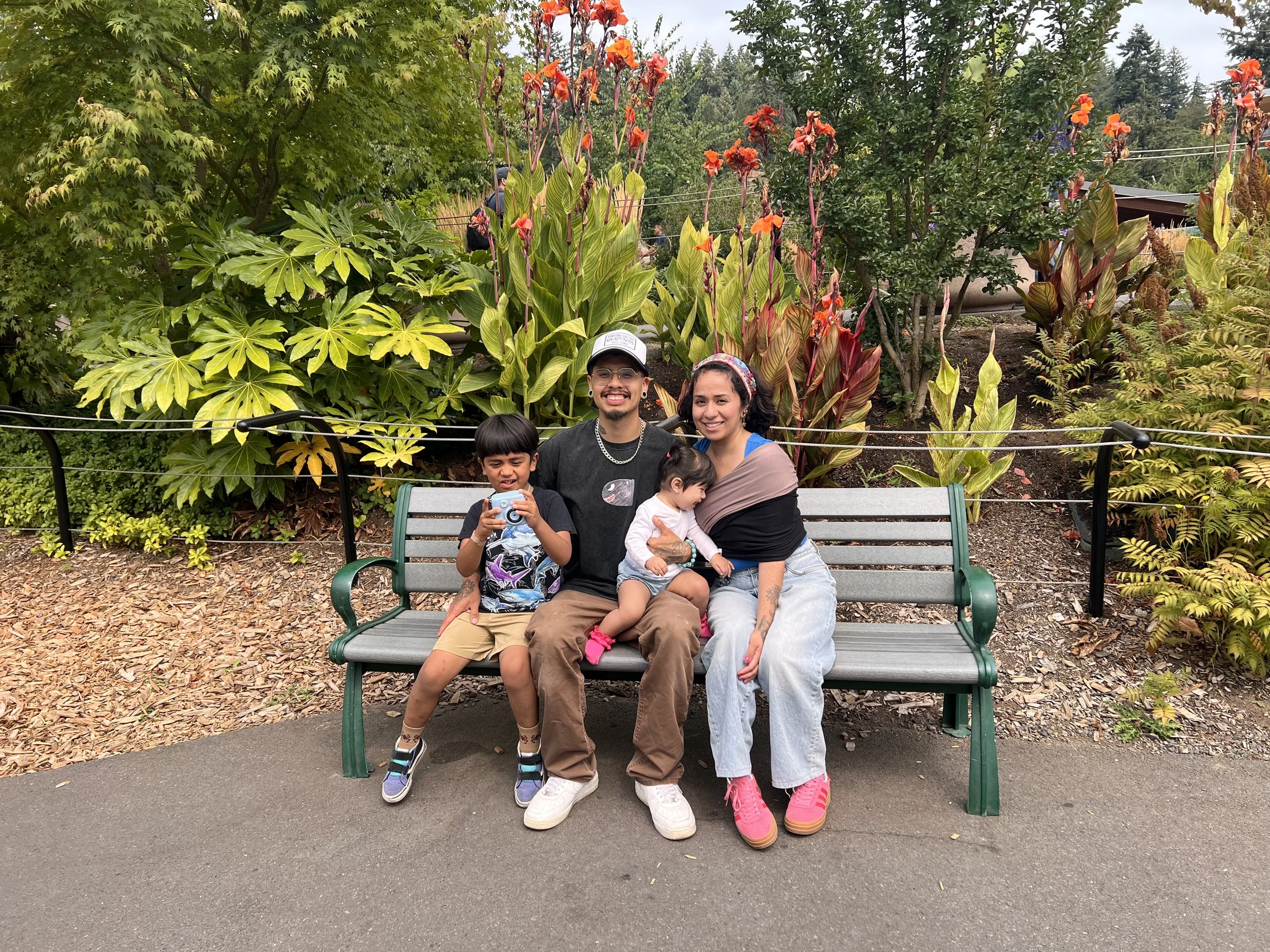
At Western Oregon, in her junior year, she met Omar Alvarado in a logic (philosophy) class. They married five years later and now have two children, Axel (5) and Itzamar (1).
“Early on, I wanted to major in criminal justice,” Elizabeth recalled. “I loved history, law theory, writing, and religion, and discovered that they go hand in hand. I ended up getting a degree in sociology with a minor in philosophy and religion.” (How many of you have read Plato’s Republic and loved it? Bring that up in your next conversation with Elizabeth.)
As in high school, Elizabeth’s appetite for applying her studies in the real world continued to accelerate. She co-chaired the Chicano student union, called MEChA (Movimiento Estudiantil Chicano de Aztlan), which built community, provided support and mentored students in activism and advocacy. In her final year, Elizabeth volunteered at the Mid Valley Women’s Crisis Center as a Spanish language hotline peer companion.
“The month after graduation, the volunteer work led to a job with the crisis center, now called the Center for Hope and Safety,” she said. I was hired to work with women seeking refuge from domestic violence, helping them find safety and support through DHS resources (Oregon Dept. of Human Services.)
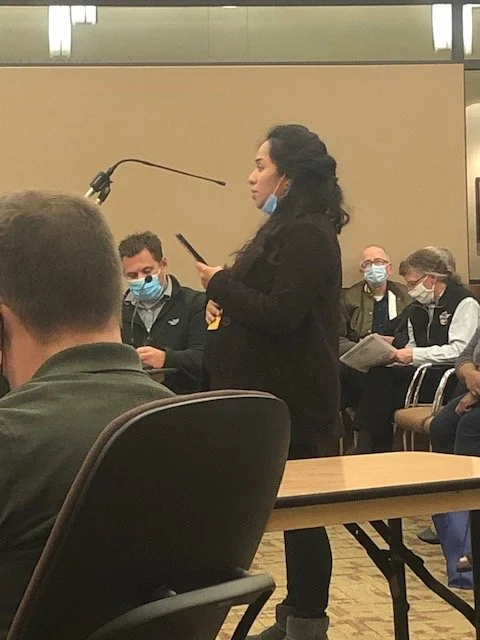
Elizabeth married in 2018 and bought a house two years later, in Keizer. “By the time we moved in, I was pregnant with Axel, and COVID was starting to impact Oregon,” she said. Nonetheless, Elizabeth got involved in a few history-making campaigns. One was to support new leaders running for political office, helping them win seats on local boards and commissions, including the Salem-Keizer School Board. “We worked full throttle on those campaigns,” she said. Simultaneously, as COVID was taking its toll on health and the economy, Elizabeth helped roll out a heroic community effort to raise and distribute farmworker relief funds to people who weren’t getting government stimulus checks.
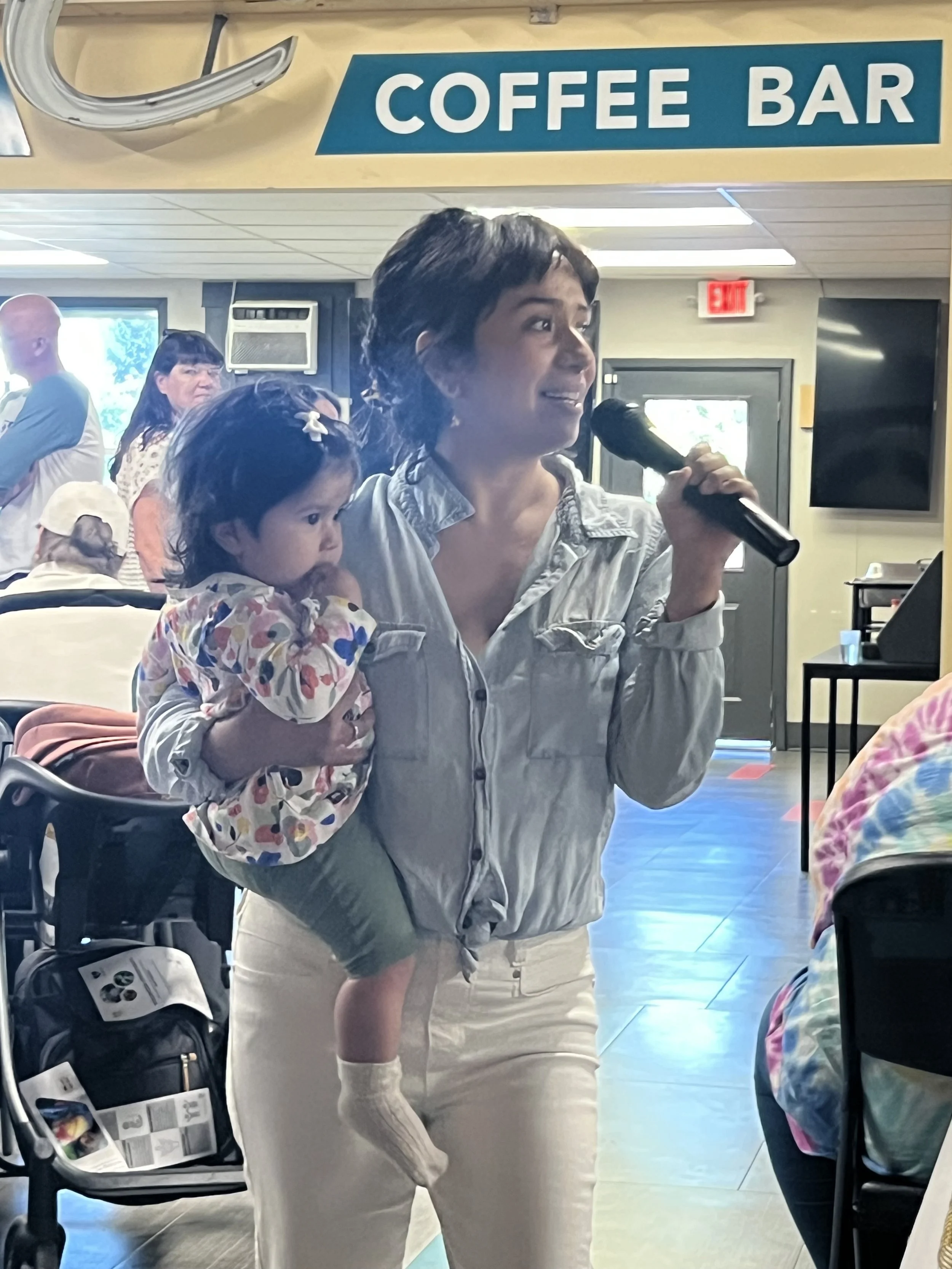
CBEL, in 2022, began recruiting in the Cummings neighborhood; both Elizabeth and Omar became founding members of the Neighborhood Family Council. “We had met Eduardo (Angulo) during the farmworker relief campaign,” she explained. “So, when he asked for volunteers to start a neighborhood family council in Cummings, we both said yes immediately. Even though our son wasn’t going to Cummings yet, we knew from experience how important it is for families to have a voice in their schools and their government.”
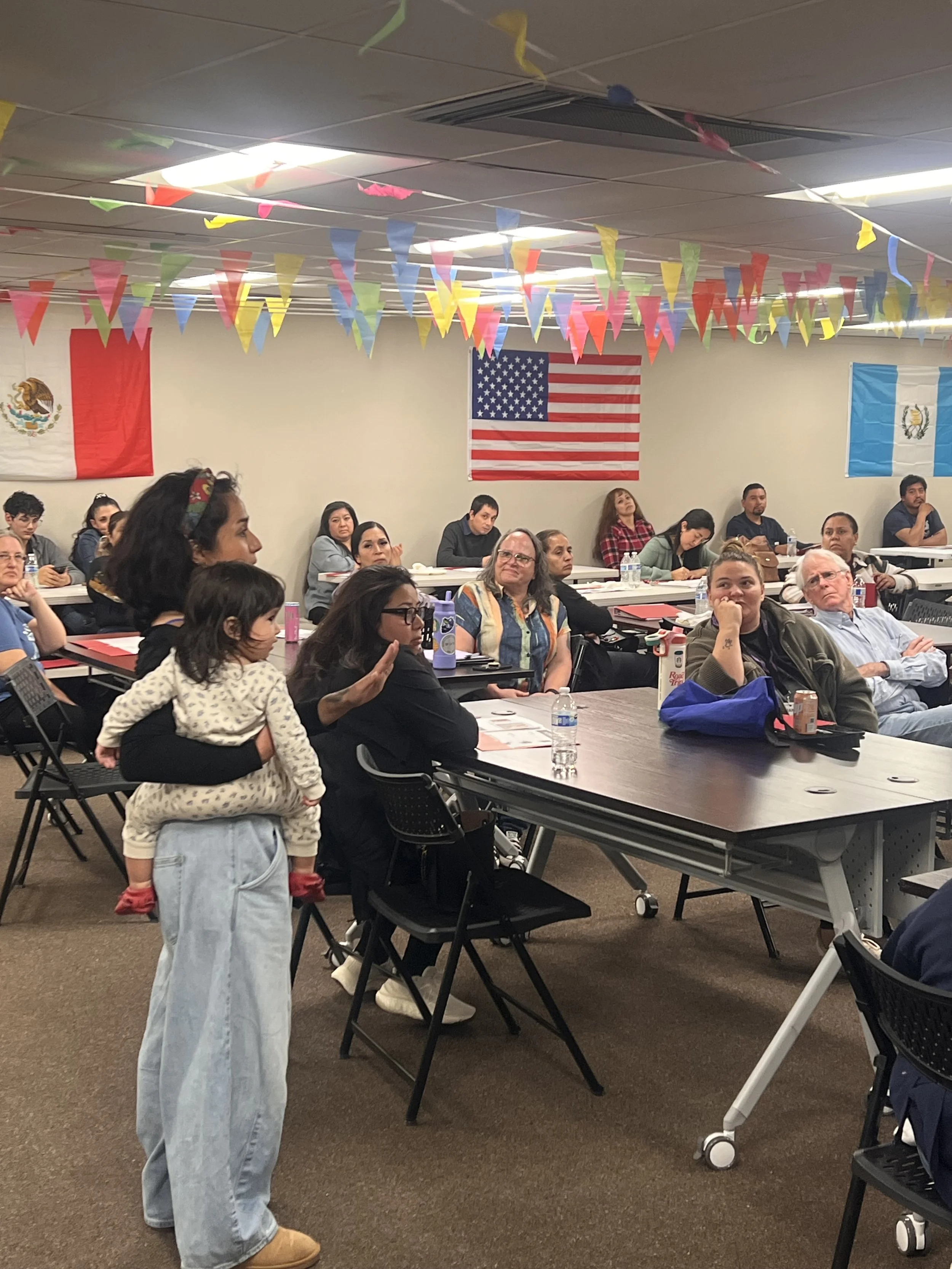
Elizabeth is the Secretary of the CBEL Family Council for the Cummings neighborhood. She has also become a regular contributor at CBEL Collaborative gatherings every other month, as an emcee and group harvesting facilitator. “I love to engage with everyday people,” she said. “At those gatherings, whether you’re a community leader or grassroots leader, everyone feels safe and comfortable enough to be vulnerable with each other.”
When news about the impending elementary school closings came out, Cummings was on the list. Elizabeth and Omar were discussing the possible impact on their neighborhood, and how the Family Council might be useful to families if that happens. Her five-year-old, Axel, who has attended many CBEL events, was listening to his parents, and calmly offered this: “We’ll figure something out.”
Like his mom and dad before him, and their parents before that, Axel will help figure it out, by listening, learning, getting involved in problem solving, and helping others. That’s how society breathes when it is at its healthy best.