
Literacy - It Begins at Birth…or Before
Written by Tim Buckley, September 2026
“Thirty million words,” said Lisa Harnisch, executive director of the Early Learning Hub of Marion and Polk counties. “That’s the difference reading makes in the home. Without books, without having a parents or caregiver to read to you, a person’s vocabulary can be 30 million words poorer by adulthood.” There’s a link between literacy and financial health.
CBEL’s core mission, to build neighborhood resiliency, anchors in the Five Protective Factors. Each of our activities helps foster one or more of the following things:
Parental resilience
Social connections
Knowledge of parenting and child development
Support in times of need, and
The social and emotional competence of children.
While “reading” or “literacy” aren’t specifically mentioned, it’s safe to say that the Early Learning Hub shares the Protective Factors philosophy, and that’s one reason CBEL chose them as a high-impact partner to help us fulfill our mission.
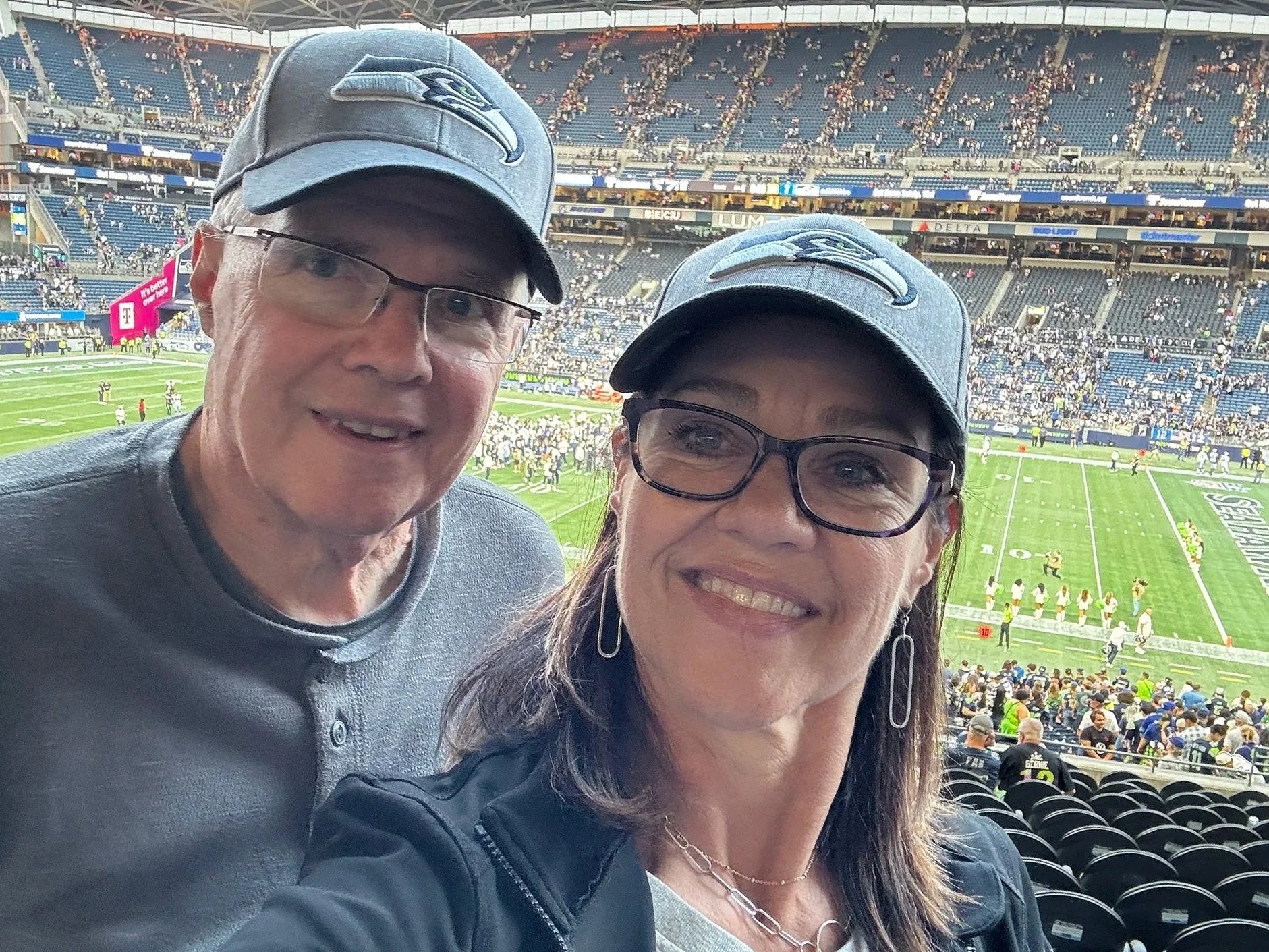
Hub Director Lisa Harnisch with her dad
Harnisch, the Hub’s director for the past 12 years, has a bountiful knowledge of literacy: from the science of brain development to the vast resources available to parents and caregivers, from knowing ideal strategies for engaging children in reading, as well as ideal ways to engage the larger community in that goal. Added to that, her working experience in the halls of power translates into necessary legislative results to benefit families and kids.
“The most rapid brain development in children happens in the first three to five years,” Harnisch said. “If they don’t have reading skills early, they must work much harder in later years to catch up.” Students from lower income homes are often the most at risk, she said, with parents and caregivers working overtime and still having fewer resources to buy books.
Literacy is more complicated than merely having access to books. Homes must be safe and secure. Families must have access to high-quality health care. Parents and caregivers must be motivated to teach their kids, training must be easy to get and low cost, and community services - including health care and education - must be aligned in the direction of early childhood success.
Whoa, that’s a lot of weight to lift for one organization, right? Harnisch is quick to point out that old adage: “It takes a village to raise a child”. The word “hub” in their name is a clue to how they (and we) meet goals for healthier children and families.
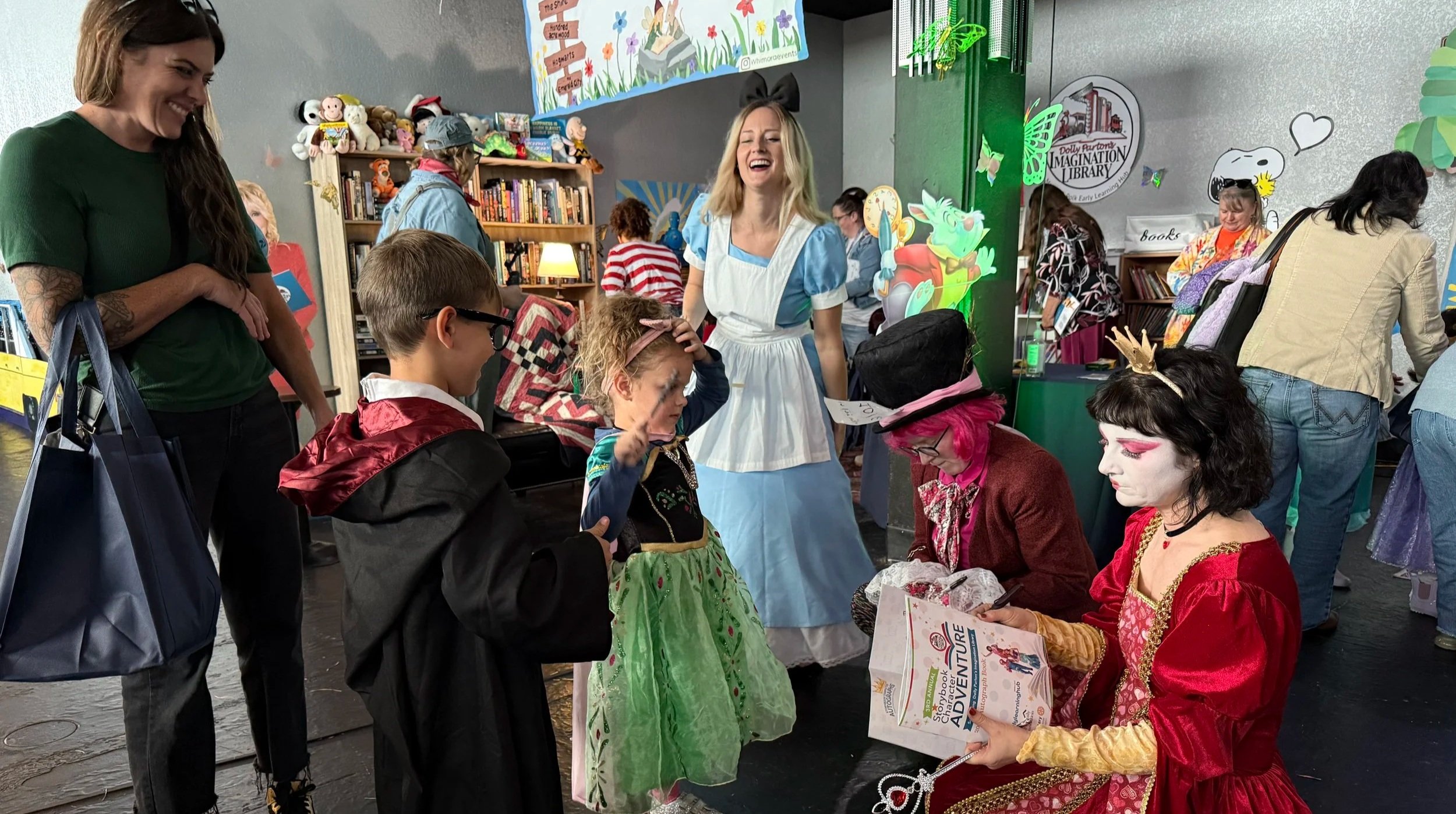
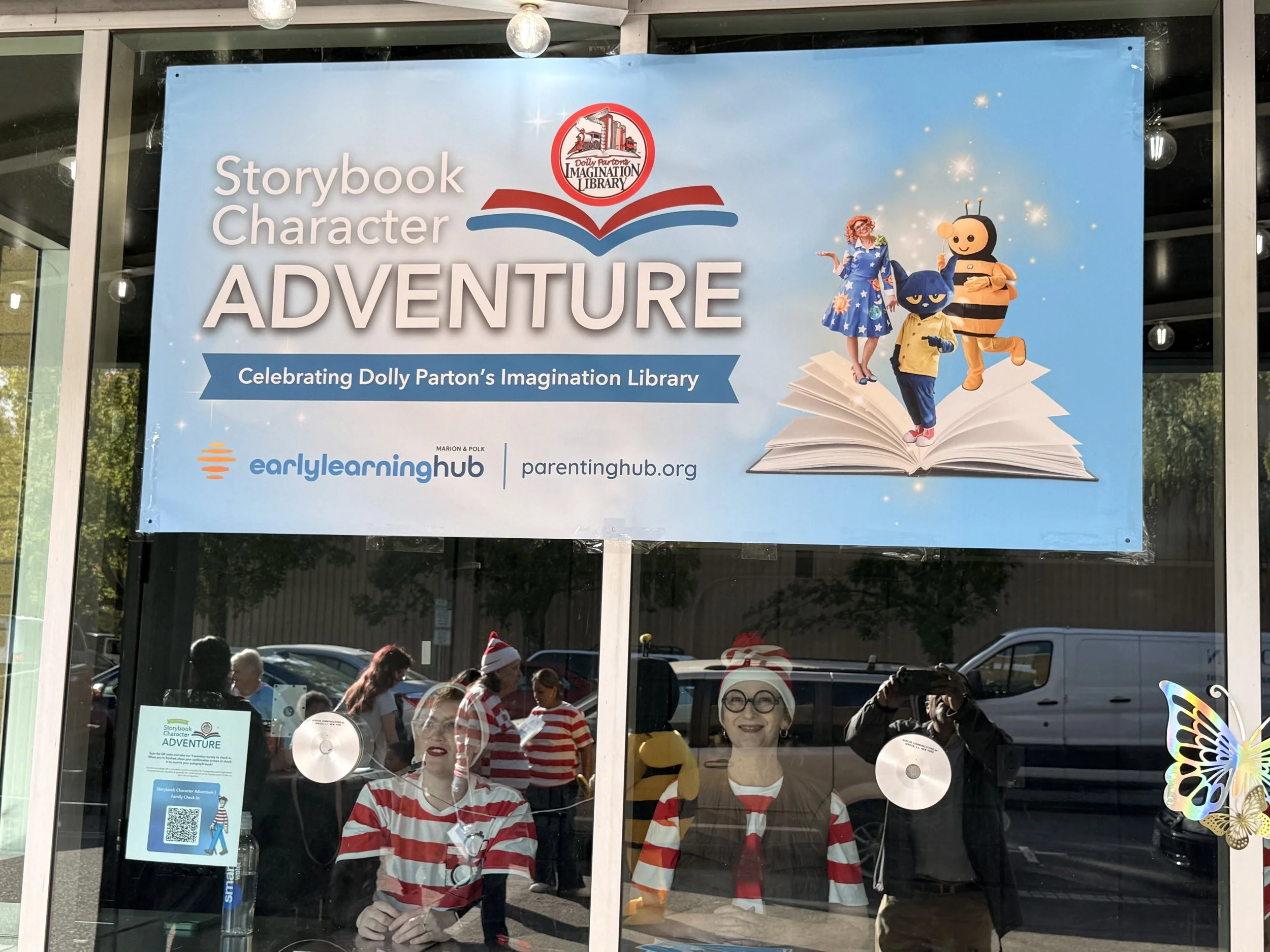
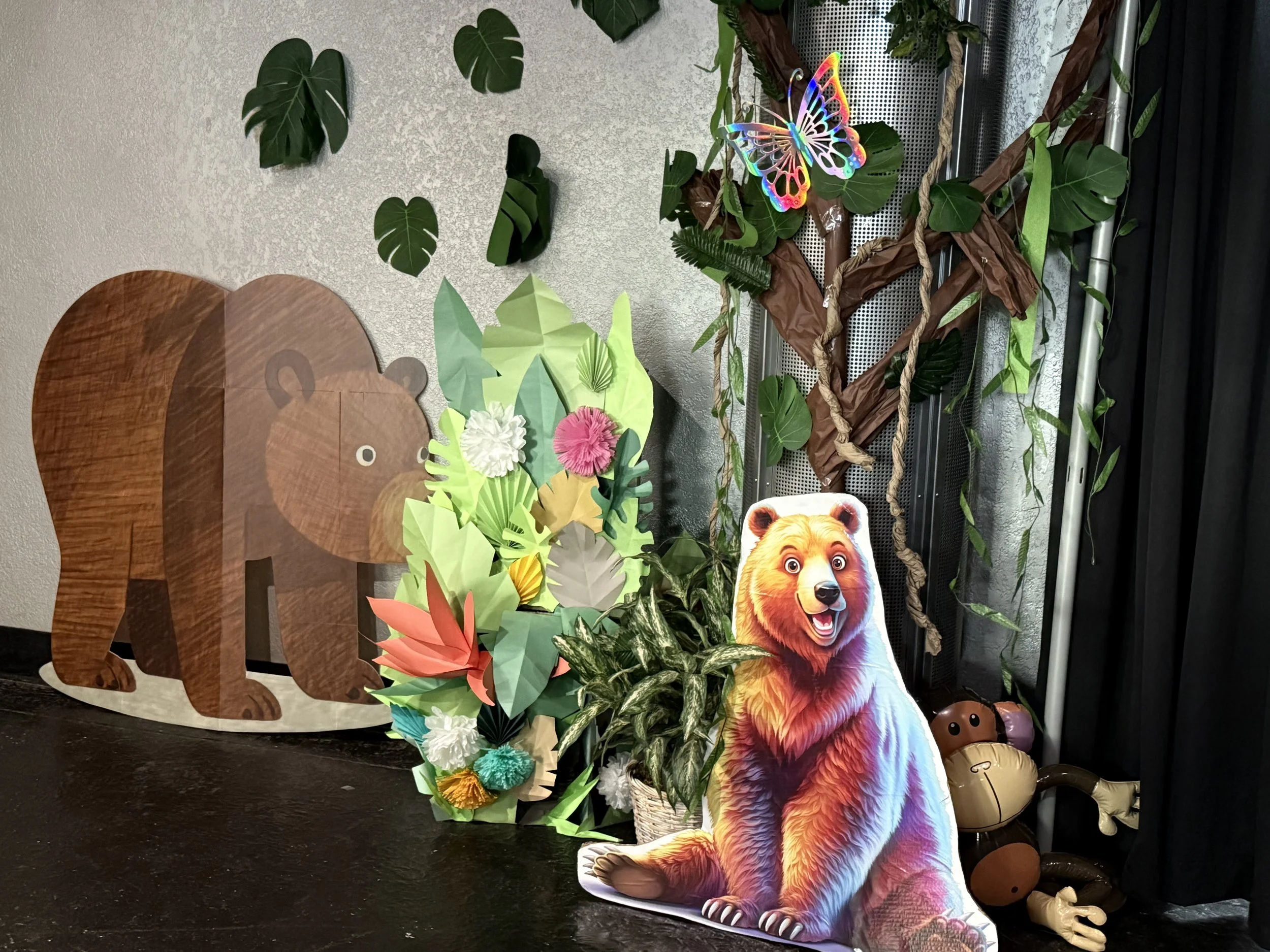
Take, for example, the recent big splash event Storybook Character Adventure at Venture Hall downtown. The theater’s lobby was transformed into a wonderland of habitats where 45 beloved storybook characters pranced and danced, paraded and took selfies with kids of all ages from the Salem area. Many of the hundreds who came were also costumed.
“The free event also featured the Dolly Parton Imagination Library in Marion and Polk Counties,” Harnisch said. Some families brought books to donate and lots of others went home with new books to read. Those who chose to donate $16, which will support a child’s reading for a year, received a handmade cape made by kids as a token of their appreciation.
But back to the “it takes a village” comment: Harnisch said the generosity of community partners and sponsors was a key to their success. Topping the list was the Epping Family Foundation, followed by Rotary Club (Creekside), Roth’s Fresh Markets, Maps Credit Union, Salem Electric, Boucher Jewelers, Dutch Bros Coffee, First Tech Federal Credit Union, PacificSource, and a handful of families with big hearts.

“The event was made more special this year, our third annual,” she continued, “because of the creative support of the Wandering Players Theatrics, whose make-over of the old Cinebarre theater will continue to support local performing arts in a collaborative way,” she said.
Later the same evening, one of the theater spaces hosted a costumed tribute to Dolly Parton. It didn’t escape Harnisch’s keen sense of humor to make a connection between the date 9-25 and the movie starring Parton, Lily Tomlin and Jane Fonda, Nine to Five.
The Hub’s work is a rainbow of free resources and local connection:
Education – parenting, kindergarten readiness, preschool programs, safe at home
Family Health – resources for primary care, dental health, mental/behavioral health
Local Family Services – daycare, family support services
Immigration Resources
State funds to help support their staff of 15 comes from a partnership with Oregon’s Department of Early Learning and Care, whose goal is to “work toward eliminating systemic inequalities in access and opportunity in all of Oregon’s communities.” Harnisch, who is the current chair of the Salem-Keizer School Board, also helped establish the Hub concept for Oregon in the early 2000s. There are now 16 Hubs around the state, each aligning services and resources for families. She and her husband have lived in Salem for more than 30 years and both of their kids graduated from local schools.
The Hub’s collaboration with CBEL’s neighborhood family councils (NFC) is a triple win, Harnisch said. The first winners are the families that get new resources to help their family and their children flourish. The second winner is the NFCs, having a dedicated and effective partner in the Hub. The third winner is the Hub itself, who benefits from having access to families in their homes, largely because of the trusted relationship built through CBEL’s NFCs. “NFCs are what we call our ‘secret sauce’,” she added, “part of our ‘trusted messenger’ effort that opens doors to families who are tentative about strangers.”
Other things the Hub provides to families, besides books, is parent education, access to funds for car seats, Safe-at-Home consultation, home visits with Community Health Workers, and access to limited “emergent needs” funds to help pay for unforeseen expenses.
“And we’re ready to launch ‘Talk, Read, Sing’,” Harnisch continued. “It’s a comprehensive campaign to encourage more parent-child conversation around everyday things in life,” she explained. “We’re working with designers and printers to produce restaurant placemats with storybook characters and messages, for example. We’re developing messaging for playgrounds, grocery stores, and waiting rooms at various health care sites, too.” Those partners will receive training as part of becoming other ‘trusted messengers.’"
“From my perspective, the Hub isn’t a stand-alone entity,” she added. “Rather, we’re like connective tissue in a nonprofit system, building relationships with others around common objectives, helping one another fill gaps in the system where families and children can fall.” It takes a lot to manage an organization in that way, to be solid where you’re needed but flexible enough to move to where the next need emerges.
Perhaps that’s how her team came up with this $100 word to describe their boss, Lisa Harnisch: “Perspicacious.” (Per-spic-kay-shus) It means: “having keen mental perception, ready insight, and a sharp ability to understand things that are difficult or hidden.”
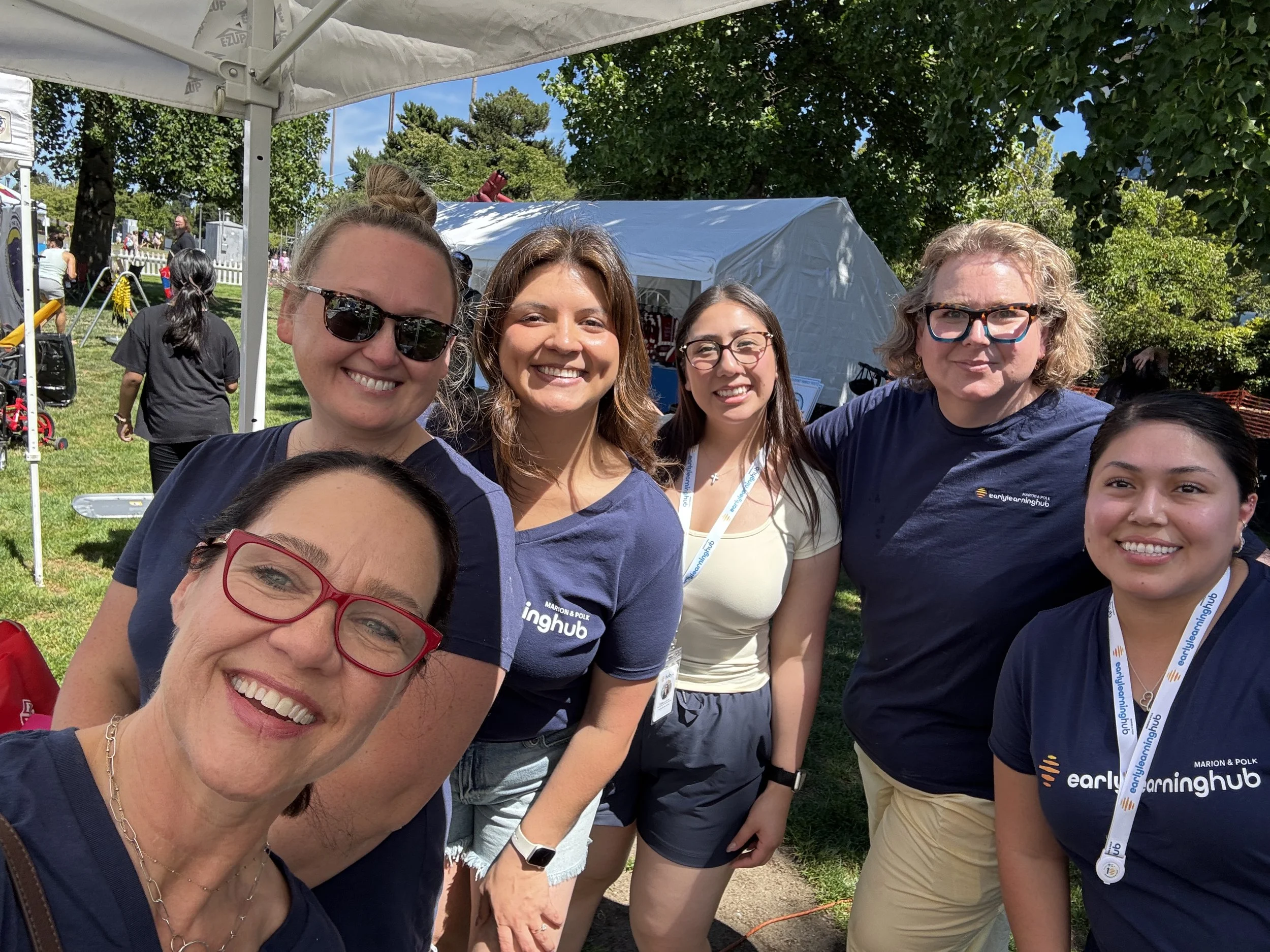
That descriptor no doubt indicates some playfulness on her staff’s part, as Harnisch would be unlikely to describe herself in that way. Perhaps the name arrived after she became fond of reminding people about the “30 million words” that separate the fully literate from those still chasing that dream. With perspicacious in our back pockets, we’re now one word closer to attaining that goal.