
Multi-tasking with Muscle: Making a Living and Nurturing Social Change
Written by Tim Buckley, March 2026
José Gonzalez remembers picking strawberries in Woodburn for fundraisers his parents joined, to raise awareness about poor wages and living conditions for migrant farm families in Marion County. The effort gave rise to the Northwest’s largest agricultural union: Piñeros y Campesinos del Noroeste, or PCUN.
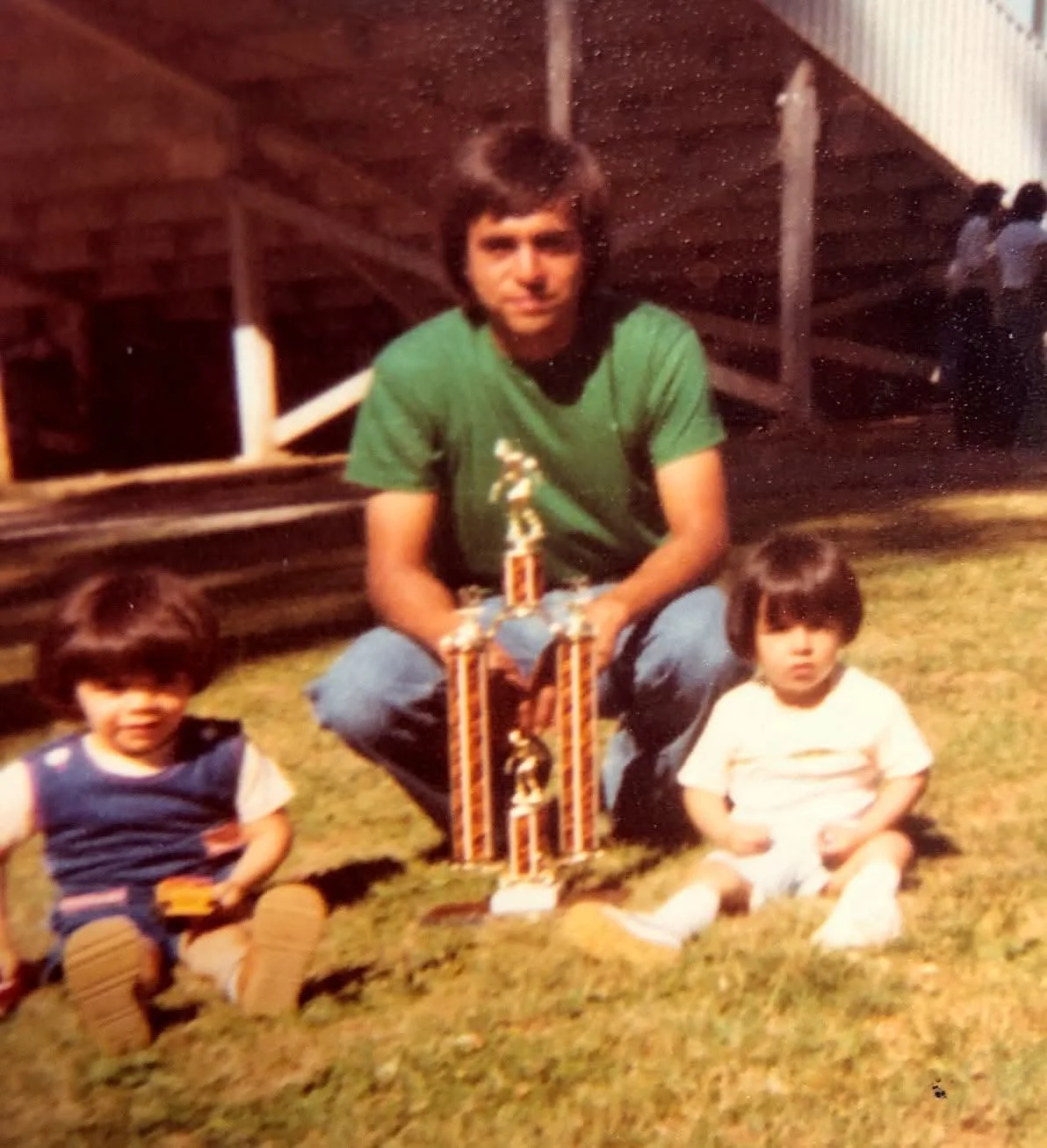
Jose, his dad, and brother in 1984 with soccer trophy
With few resources beyond creativity and determination, Jose witnessed motivated volunteers who gradually improved the social, financial and political well-being of Latino families in the Willamette Valley. He watched his mother become a successful upholsterer and his father become the long-time manager of a shelter for poor farm workers. Those years helped shape his life’s work in Salem and Keizer, as a businessman, a real estate professional, a community organizer, a mentor, and Salem City Councilor.
Jose’s parents came from Mexico City in the early 1970s as farm workers. Of their six children, Jose was the first born in the US. “When I think about my life now, compared to the years growing up in rural Marion County, it’s hard to imagine how different that life was…. it’s like a movie to me when I think of it,” he said.

Graduating from Mt. Angel high school in 1993, Jose began studying at Chemeketa Community College but quit when he found out he was an expectant father. With responsibility for a newborn son (J.J.), Jose hustled his way into management positions at a couple of restaurants while also getting his real estate license. His son’s early health issues pressured him to aim higher on the employment chain, and when he landed at Tu Casa Real Estate in 1998, his boss provided business mentorship but also demonstrated how to build community through grassroots networking. He was only 22 years old.
Then came the national recession in 2007, the year after Jose purchased Tu Casa from its founder. That crash sent him back to basics, remembering how his parents built something out of almost nothing. During the slow rebound, Jose met other young Latino entrepreneurs who were also doing volunteer work in Salem and Keizer to help poor families survive. That work formed the core of the Latino Business Alliance, which now has nearly 70 members and offers free business development courses (11 topics) to those in the Salem area wishing to improve their bottom line. Angelina Martinez is the LBA full-time Director of Operations, a former retail shop owner with businesses in five different malls.
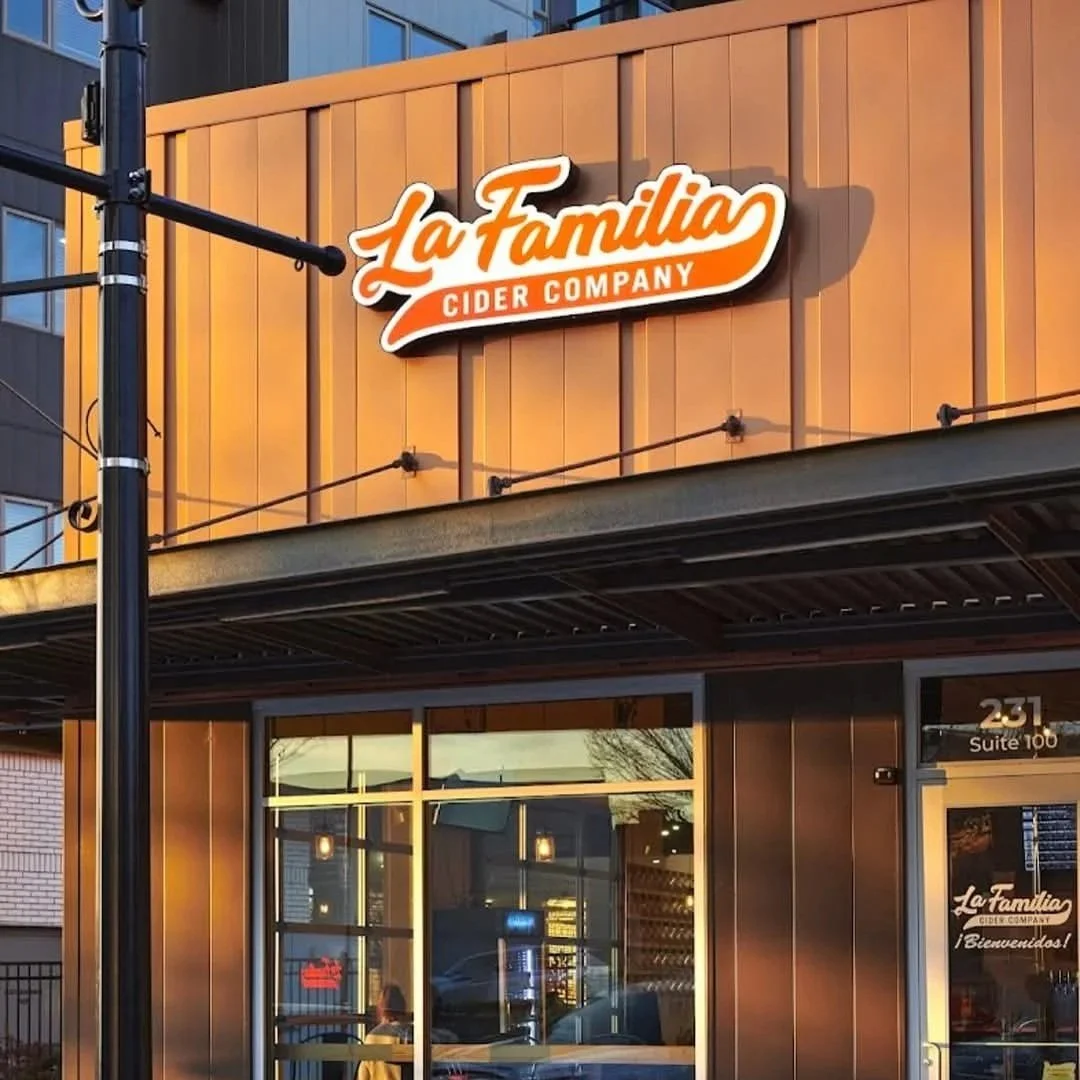
By the time Jose was elected to the Salem City Council in 2019, representing District 5 in North Salem, he had been awarded the Distinguished Service Award by the Salem Area Chamber of Commerce for his volunteer work in child development, farm workers advocacy, small business support and philanthropy. He was a regular presenter at Chemeketa’s Business and Leadership degree program. In 2017, he opened La Familia Cider Company in downtown Salem, where two of his four children (J.J. and Jazz) now work. And he was invited by President Obama to the White House as an advocate representing immigrant entrepreneurs.
Jose’s city council term coincided with the start of CBEL’s first efforts. Interviewed for a video (view below) about the value of Neighborhood Family Councils, Jose recalled his first visit to a Fun Friday event, meeting mothers who ran the council and recruited volunteers to stage events. “Meeting those moms on the family council really impressed me,” he said. “They had confidence and they knew their work was valued. I agreed to champion their request for installation of restrooms at Northgate Park,” he added “and we were able to get a $1 million allocation in the City’s public works budget for that project.”
This year, Jose’s efforts will result in a small, affordable housing subdivision to be built in North Salem’s Washington neighborhood, backed up to the State Fairgrounds. Knowing how homeownership is the foundation for building financial security, Jose’s philosophy overlays that of CBEL. “Few first-time homeowners can’t afford the average prices in Salem and Keizer,” he said. So, with collaborative partners and efficient design, he believes that the prices for these seven homes will be substantially less than the $400,000 cost of most properties elsewhere in the city. His and CBEL’s ideas about “infill” developments are identical – to replace older single-family homes with more compact dwellings – a way to maximize efficiency in a city with limited growth boundaries.
“CBEL is good at connecting the dots, of bridging gaps and bringing partners to the table who can make life easier and more meaningful for neighborhoods experiencing the most adversity,” Jose said. “By involving the schools, by increasing civic participation, by training the next generation of leaders from a corps of volunteers, and by amplifying their voices in the halls of power, CBEL is helping to generate a powerful belief in self-determination among people who have never had that experience.”