
The Making of a Leader
An Interview with Paul DeMuniz
Practicing the Art and Discipline of Governance | CBEL Board Member Profile
“Strength of character was not a stranger to empathy and compassion.”
Those words, spoken by Paul DeMuniz as he reflected on his grandfather, might also serve as a description of Paul's own life.
Paul grew up in a family that experienced its share of instability. His parents separated when he was very young, and his mother returned to Portland, where they found refuge in his grandfather's home. Paul would live with his grandfather during two important periods of his childhood, the last ending when his grandfather died when Paul was fourteen.
His grandfather taught him to read at age four, introduced him to literature, and modeled a kind of strength that did not require sacrificing kindness.
He also offered a rule that Paul has carried throughout his life: “When in doubt, do nothing.”
It was not advice to avoid responsibility. It was a reminder to think before reacting, to resist rushing to judgment, and to exercise self-discipline.
Looking back, Paul recognizes how fortunate he was. His mother had someone to turn to, and he had a grandfather who provided the stability, encouragement, and example that helped shape his future.
A Sergeant Who Changed His Life
Years later, as a young airman stationed in Maine, Paul received another lesson in leadership.
Paul had received a $50 check as payment for a debt owed to him and, unaware that the check was bad, cashed it. When the check bounced, he faced military disciplinary action that could have resulted in a reduction in rank. Recovering from surgery in a military hospital, he spent a sleepless night fearing that this innocent mistake had ruined his future in the Air Force.
The next morning, his supervisor, Sergeant Carlton Brillard, walked into his hospital room and announced, “You owe me $50.”
Without being asked, Brillard had paid the check and persuaded the commanding officer to discard the disciplinary paperwork.
Paul never forgot that act of loyalty.
Brillard taught him that leadership was not primarily about authority, position, or receiving credit. It was about genuinely caring for the people entrusted to your leadership, sharing a mission, and helping others succeed.
Less than three years after entering the Air Force, Paul received an unusually early promotion to staff sergeant. He believes that might never have happened without Brillard's intervention.
A Promise Kept in Vietnam
During his service in Vietnam, Paul managed a supply operation supporting military engineers. Six Vietnamese men worked alongside him.
They spoke little English. Paul spoke no Vietnamese. Yet over the course of a year, they developed relationships that transcended language and culture.
They worked together, shared time together, and found ways to communicate. Paul even learned to play a Vietnamese board game with them.
Near the end of his tour, the men told him their village had been burned and asked whether he could help them obtain lumber to rebuild.
Paul promised he would.
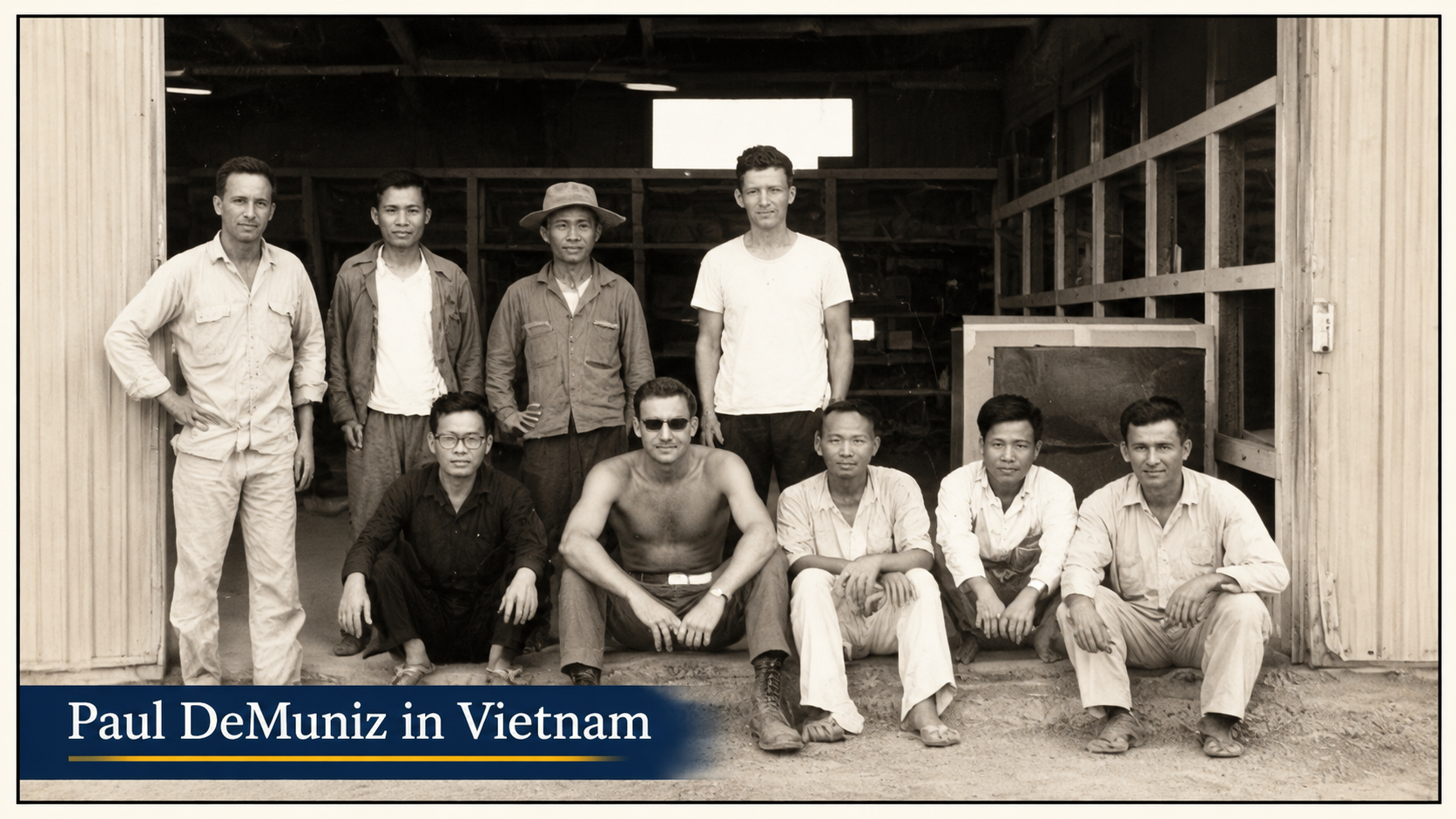
With only two weeks remaining before returning home, he arranged for a military truck, an officer, and an armed escort to deliver a large load of salvaged lumber to the village. The journey took them far beyond the safety of their base. They arrived near dusk and returned in darkness, frightened but unharmed.
When Paul departed Vietnam, the six men gathered to say goodbye.
As he recalled the moment more than fifty years later, his voice broke with emotion.
“They held on to my legs and wept like children.”
They gave him a card, which he still treasures. Its message was simple: When you are home in the peaceful countryside, think of us.
Paul has never forgotten them.
Justice for a Man Without a Voice
Years later, as an experienced Oregon trial attorney, Paul was approached by a group concerned about the murder conviction of Santiago, an Indigenous Mexican farmworker whose trial had relied on Spanish interpretation despite his different native language.
Paul agreed to read the trial transcript.
What he discovered convinced him that the problem went beyond language. He believed the evidence did not establish Santiago's guilt.
The committee had raised approximately $15,000 to help with the case. Paul told them to use the money for an investigator. He would represent Santiago without charge.
The investigation eventually uncovered serious forensic problems and evidence implicating another person. Paul traveled to Los Angeles to obtain the assistance of a nationally respected forensic pathologist and even went to Mexico to investigate testimony that could help establish the truth.
The post-conviction challenge succeeded.
Santiago eventually regained his freedom, attended the University of Portland on a scholarship, married, raised a family, and built a new life.
For Paul, the case was about more than winning in court. It was about the obligation to act when someone without power had suffered an injustice.
Why CBEL?
As our conversation turned to Paul's long commitment to CBEL, I asked him how these experiences influenced his willingness to devote so much of his time and energy to strengthening families and neighborhoods.
His answer returned immediately to his childhood.
“Where would I have been if my mother had not had that to fall back on?”
Paul understands from personal experience the importance of having someone to turn to, someone who provides the stability, confidence, and encouragement that make it possible to flourish.
He sees CBEL as helping to create those same conditions for children and families who may not otherwise have them.
He also sees a fundamental distinction between helping people and telling them how to live.
“We're not going into a community [saying], here's the five things you need to do. We're saying, what resources do you need?”
Paul connects that approach to Catholic social teaching and the dignity of every person.
It is a philosophy that recognizes both the strengths already present in neighborhoods and the responsibility of the larger community to help remove barriers to opportunity.
And it reflects CBEL's commitment to listening to residents, supporting neighborhood leadership, strengthening families, and helping children succeed.
The Art and Discipline of Governance
Paul's life offers an important lesson about the character of governance.
The discipline of governance requires clear purposes, sound policies, accountability, and thoughtful decisions. But the art of governance requires something more: the ability to listen, to recognize the dignity and potential of others, and to exercise authority with both courage and compassion.
Paul learned those lessons from a grandfather who taught him to think before acting, a sergeant who protected a young airman's future, six Vietnamese men who trusted him to keep his word, and a farmworker whose freedom depended on someone being willing to challenge an injustice.
When I asked Paul why he continues to serve CBEL, his answer was remarkably simple.
“I was blessed. Why would I not?”
Perhaps that is the deepest lesson of his story.
Good governance is not simply about the exercise of authority. It is about accepting responsibility for the well-being of others and using whatever gifts, experience, and influence we possess to help them flourish.
Based on an interview conducted by Jim Seymour for CBEL's Practicing the Art and Discipline of Governance newsletter.